Expert Retinal Care Close to Home

The retina is where vision happens. This thin layer of light-sensitive tissue lining the back of the eye converts everything we see into the signals our brain interprets as sight, and conditions affecting it can range from manageable with appropriate treatment to sight-threatening without prompt intervention. For Elkhart residents, access to expert retinal care within their own community means that monitoring, treatment, and urgent evaluation are never far away. Schedule a retinal evaluation at our Elkhart location today.

The Retina and Why It Matters

The retina is one of the most complex and delicate tissues in the human body. It contains millions of light-sensitive photoreceptor cells, a dense network of blood vessels, and the macula, the small central area responsible for the sharp, detailed vision we use for reading, driving, and recognizing faces.

When disease, injury, or age-related changes affect the retina, the consequences for vision can be profound. Some retinal conditions develop silently before producing any noticeable symptoms, making regular comprehensive eye exams and timely specialist evaluation essential for early detection and effective management.


Banner media

Retinal Conditions We Treat in Elkhart

At Boling Vision Center's Elkhart location, our Medical Retina Center evaluates and manages the full range of retinal and macular conditions.

Age-Related Macular Degeneration (AMD)

AMD is the leading cause of significant central vision loss in adults over 60, affecting the macula and disrupting the sharp, detailed vision essential for daily life. We offer the full range of AMD treatments at our Elkhart location, including monitoring and lifestyle management for early dry AMD, anti-VEGF injections for wet AMD, and Valeda light therapy for eligible dry AMD guests.

Diabetic Retinopathy and Diabetic Macular Edema

Diabetes is one of the leading causes of preventable vision loss in the United States. Elevated blood sugar damages the retinal blood vessels over time, leading to diabetic retinopathy and diabetic macular edema. Annual dilated eye exams are essential for every guest with diabetes, and our Elkhart team provides comprehensive monitoring and treatment for all stages of diabetic eye disease.

Retinal Vascular Disease

Retinal vein and artery occlusions occur when blood flow within the retinal vessels is blocked, causing sudden vision changes and, without appropriate management, potential permanent vision loss. Prompt evaluation and treatment are critical for these conditions, and our team is equipped to manage them with the urgency they require.

Retinal Detachment

A retinal detachment occurs when the retina separates from the underlying tissue, causing sudden vision loss that requires urgent surgical intervention to prevent permanent blindness. Symptoms, including a sudden shower of floaters, flashes of light, or a shadow or curtain in the visual field, should be treated as an emergency and evaluated immediately.

Macular Disorders

Macular holes, epiretinal membranes, and other macular disorders affect the central retina and can produce significant distortion and central vision loss. Accurate diagnosis and appropriate management, whether through monitoring or surgical intervention, are guided by the advanced imaging available at our Elkhart location.

Vitreous Conditions

The vitreous is the gel-like substance filling the eye, and age-related changes, including posterior vitreous detachment, can produce new floaters and flashes that require evaluation to rule out associated retinal tears or detachment. While most posterior vitreous detachments are benign, prompt evaluation is always recommended when new symptoms develop.

Retinal Tears

Retinal tears are breaks in the retinal tissue that, if left untreated, can progress to retinal detachment. They are often identified during a dilated retinal examination and can be treated with laser photocoagulation to seal the tear before detachment occurs.

Background media

How We Diagnose Retinal Conditions in Elkhart

Accurate diagnosis of retinal conditions requires advanced imaging technology and clinical expertise. At Boling Vision Center's Elkhart location, we use a comprehensive suite of diagnostic tools to evaluate retinal health with precision.

  • Dilated Retinal Examination: A thorough dilated exam allows direct visualization of the retina, macula, optic nerve, and retinal blood vessels, forming the foundation of every retinal evaluation.
  • Optical Coherence Tomography (OCT): OCT provides detailed cross-sectional imaging of the retinal layers, allowing precise characterization of macular conditions, fluid accumulation, and structural changes that guide treatment decisions.
  • OCT Angiography (OCTA): A non-invasive imaging modality that visualizes retinal and choroidal vasculature without dye injection, providing detailed information about blood flow and vessel health throughout the retina.
  • Fluorescein Angiography: In select cases, fluorescein angiography provides detailed mapping of retinal blood flow, identifying areas of leakage, ischemia, and abnormal vessel growth that inform treatment planning for conditions including wet AMD, diabetic retinopathy, and retinal vascular disease.
  • Retinal Photography: High-resolution retinal photography provides a detailed, documentable record of the retina's appearance at each visit, allowing precise comparison over time to track disease progression or treatment response.

It was my first time there with my 3-year-old, everyone was sooooo amazing, and it was the CLEANEST office I’ve ever seen!

Paige Thomas
Quote Background

Retinal Treatments Available in Elkhart

At Boling Vision Center's Elkhart location, we offer the full range of in-office retinal treatments appropriate for the conditions we manage.

Anti-VEGF Injections

Anti-VEGF injections are the primary treatment for wet AMD, diabetic macular edema, retinal vein occlusion with macular edema, and other conditions driven by abnormal vessel growth and vascular leakage. Administered in the office under topical anesthesia, they are generally well tolerated and have transformed the management of previously devastating retinal conditions.

Laser Photocoagulation

Laser treatment is used to seal retinal tears before they progress to detachment, treat areas of retinal ischemia in proliferative diabetic retinopathy, and address certain patterns of macular edema. It is a well-established and effective tool in the retinal treatment arsenal.

Valeda Light Therapy

Boling Vision Center is among a select group of practices offering Valeda Light Delivery System for dry AMD. This non-invasive photobiomodulation treatment supports retinal cell health and has shown promising results in slowing dry AMD progression and supporting visual function for eligible guests at our Elkhart location.

When Retinal Symptoms Require Urgent Attention

Some retinal conditions require immediate evaluation rather than a scheduled appointment.

Seek same-day care at our Elkhart location or go directly to the nearest emergency room if you experience:

  • Sudden loss of vision in one or both eyes
  • A sudden dramatic increase in floaters or new flashes of light
  • A shadow, curtain, or dark area moving across the visual field
  • Sudden distortion of central vision or straight lines appearing wavy

These symptoms can signal retinal detachment, vitreous hemorrhage, retinal artery occlusion, or conversion from dry to wet AMD, all of which require prompt evaluation and, in many cases, urgent treatment.

Banner media

Why Choose Boling Vision Center for Retina Treatment in Elkhart?

Boling Vision Center's Medical Retina Center brings advanced diagnostic imaging, the full range of in-office retinal treatments, and experienced providers to retinal care in Elkhart, all within a comprehensive ophthalmology practice that manages everything from early monitoring to complex medical management. With over 65 years of trusted community care and a team known for taking difficult cases seriously, we're the retinal care choice Elkhart trusts. Amazing happens here.

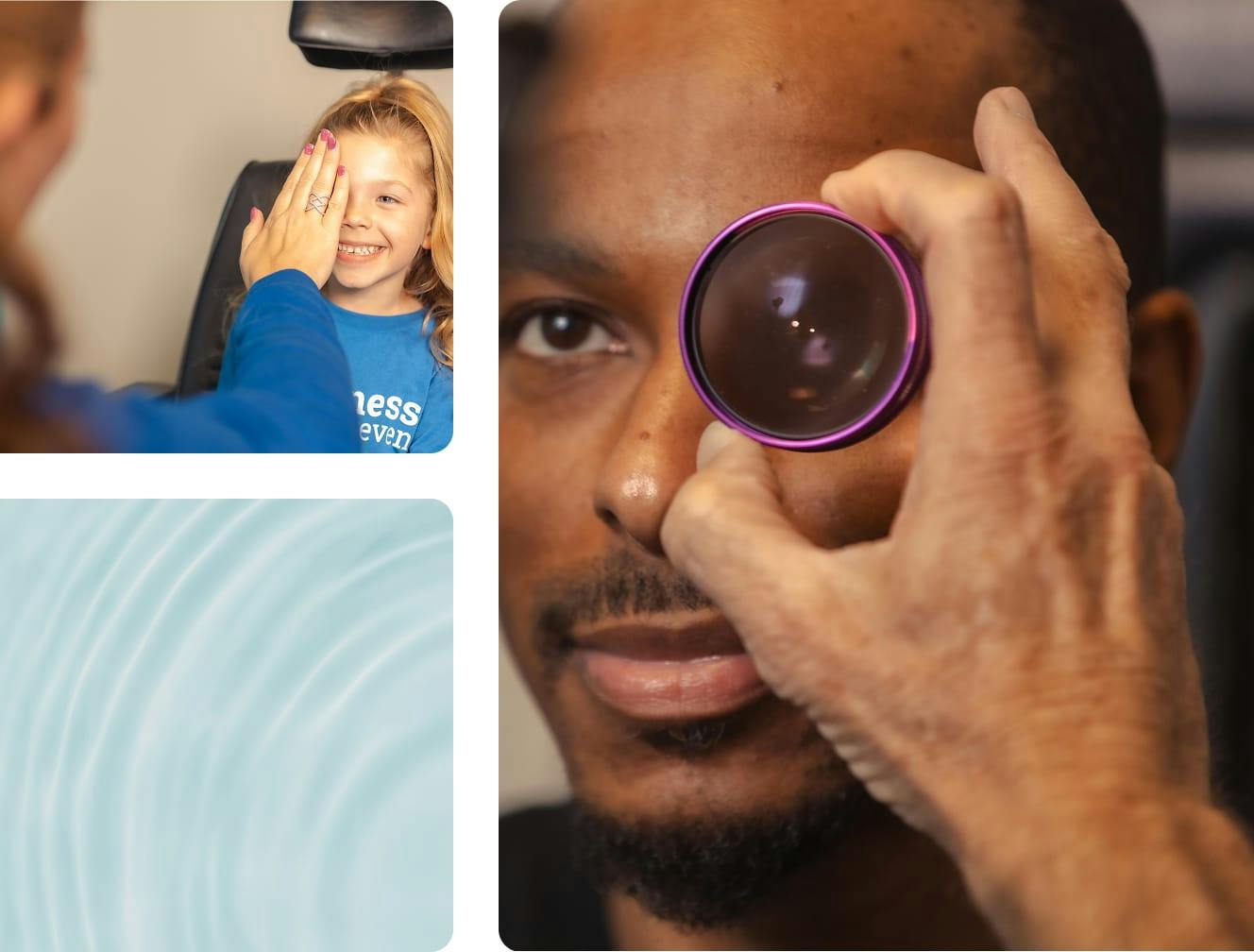
man getting his eye checked | child getting her eye checked | abstract art

Frequently Asked Questions Retina Treatment

How often should I have my retina examined?

For adults without known retinal conditions, a dilated retinal examination as part of an annual comprehensive eye exam is appropriate. Guests with diabetes, AMD, a family history of retinal disease, or other risk factors may need more frequent monitoring. Your provider will recommend the appropriate schedule based on your individual situation.

Are retinal injections painful?

Most guests find anti-VEGF injections well tolerated. Topical anesthesia is applied before the injection, and the procedure itself is brief. Some guests experience mild discomfort or a foreign body sensation after the injection that typically resolves within a day or two.

What is the difference between a retinal tear and a retinal detachment?

A retinal tear is a break in the retinal tissue that has not yet caused the retina to separate from the underlying tissue. It can often be treated with laser photocoagulation to seal the tear and prevent progression. A retinal detachment occurs when the retina has separated, requiring surgical intervention. Prompt evaluation of symptoms, including new floaters and flashes, is important to distinguish between the two.

Can floaters be a sign of something serious?

Most floaters are benign and result from age-related changes in the vitreous. However, a sudden onset of new floaters, particularly accompanied by flashes of light or a visual field change, can signal a retinal tear or detachment and warrants prompt evaluation. When in doubt, call our Elkhart office, and our team will advise on the appropriate urgency.

Is Valeda light therapy available at the Elkhart location?

Yes. Valeda light therapy for dry AMD is available at Boling Vision Center's Elkhart location. Speak with our team at your next appointment to find out whether you may be an appropriate candidate for this treatment.

Amazing Happens Here

Three generations. One unwavering standard.

Contact Us
Accessibility: If you are vision-impaired or have some other impairment covered by the Americans with Disabilities Act or a similar law, and you wish to discuss potential accommodations related to using this website, please contact our Accessibility Manager at (574) 293-3545.
Contact Us