
At Boling Vision Center, our Vision Correction Center offers the full spectrum of permanent vision correction procedures, advanced technology, and the individualized expertise to match every guest with the procedure that's genuinely right for their eyes, their prescription, and their life.
Vision Correction Center
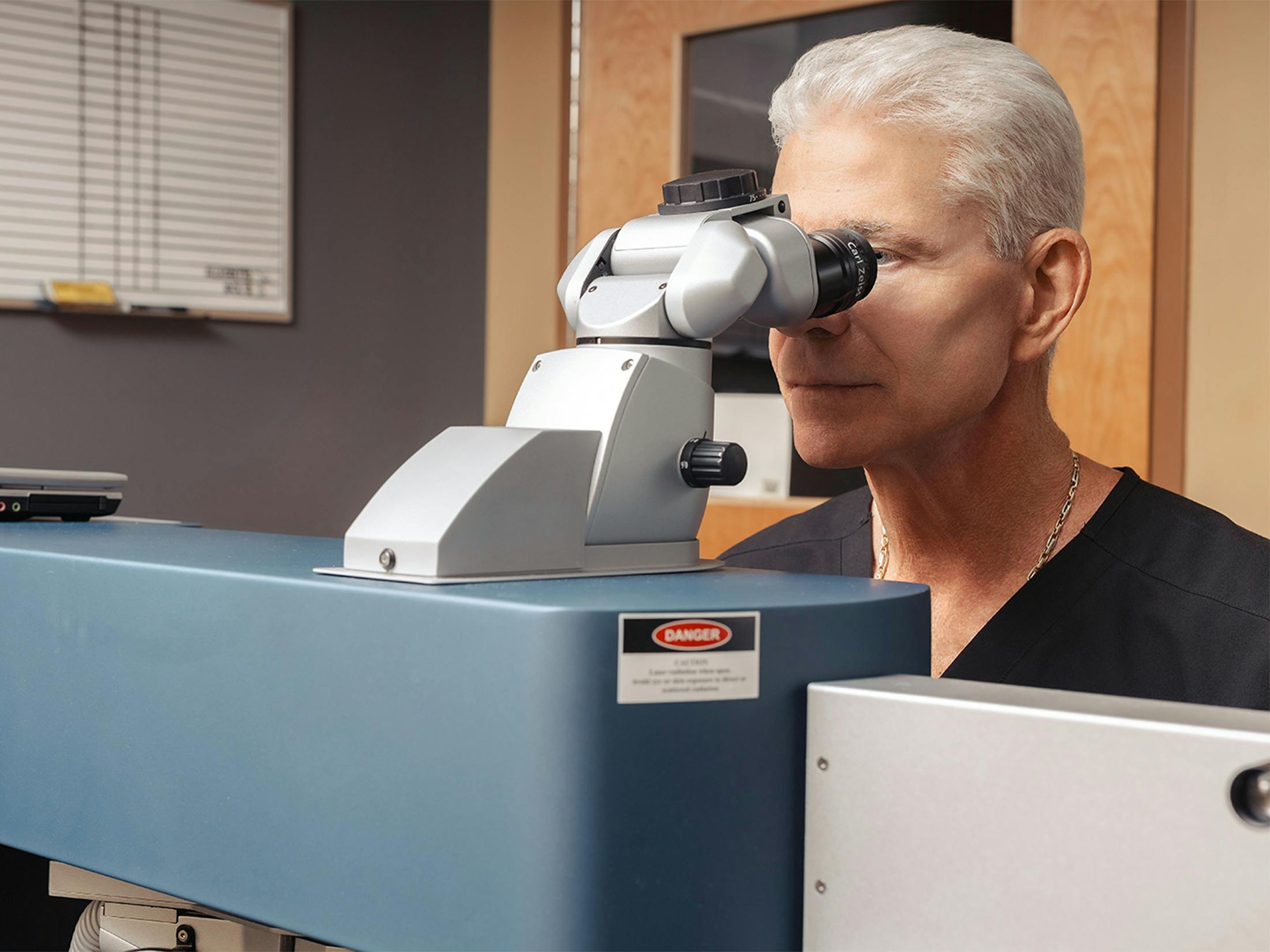

See the World Differently
Freedom from glasses and contact lenses isn't just a convenience. For most people who achieve it, it's a meaningful shift in how they experience daily life, from the clarity of waking up and simply seeing, to the freedom of an active lifestyle unencumbered by lenses. Vision correction makes that possible, and at Boling Vision Center, we take the responsibility of delivering it seriously.
Schedule a vision correction consultation at any of our four Northern Indiana locations and take the first step toward seeing life more clearly.
The Boling Difference for Vision Correction
Vision correction at Boling Vision Center is not a high-volume assembly line. It is a carefully considered, individually tailored process delivered by experienced surgeons in our own Joint Commission-certified INSIGHT Surgery Center, supported by a team that stays with every guest from the first consultation through every post-operative visit.
Advanced Technology
Our Vision Correction Center is equipped with advanced laser platforms, diagnostic imaging systems, and implant technologies that give our surgeons the precision and information needed to deliver consistently excellent outcomes. From wavefront-guided laser treatment to the latest generation of implantable lenses, we invest in the technology that makes a real difference in results.
Experienced Surgeons
Boling Vision Center's surgical team brings extensive experience across the full range of vision correction procedures. That depth of experience, combined with the familiarity of operating in our own dedicated ophthalmic surgery center with our own trained team, produces a level of surgical consistency and confidence that benefits every guest.
Honest, Individualized Guidance
Not every guest is a candidate for every procedure, and at Boling Vision Center, we never fit a guest to a procedure, but rather a procedure to a guest. If a procedure isn't right for your eyes, we'll tell you so, and we'll explain why. If an alternative approach would serve you better, we'll recommend it clearly and completely. Our goal is always the best possible outcome for the individual in front of us, nothing more and nothing less.
Continuity of Care
Because our Vision Correction Center is part of a full-scope ophthalmology practice, the care doesn't stop when the procedure is complete. Post-operative care, monitoring, and any necessary follow-up are all managed by the same team, in the same practice, with full access to your complete clinical history.



Your Vision Correction Options
There is no single best vision correction procedure. There is only the procedure that is best for your eyes, your prescription, your lifestyle, and your goals. At Boling Vision Center, we offer the full range of permanent vision correction options and take a genuinely individualized approach to helping every guest find the right fit.
LASIK
LASIK
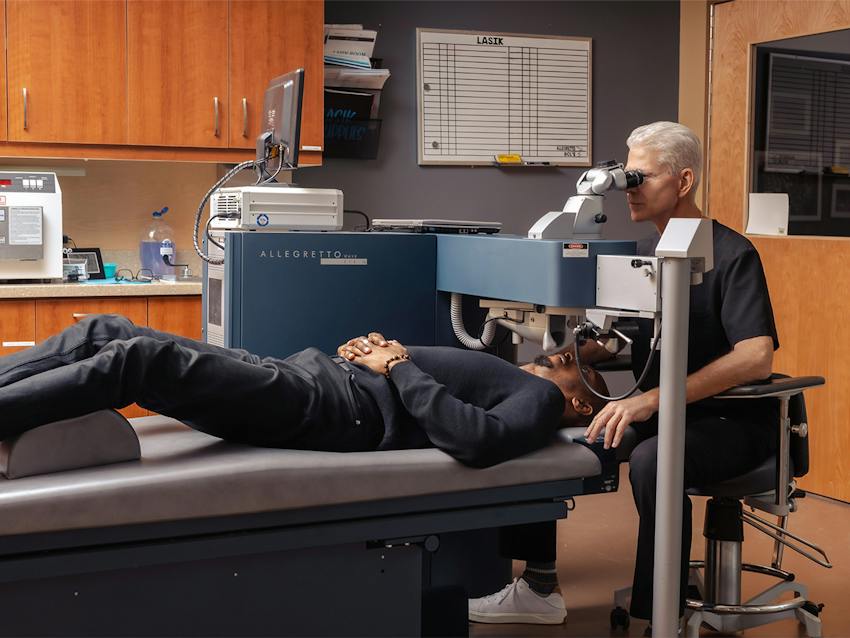
LASIK is the world's most performed elective surgical procedure and the starting point for most vision correction conversations. Using a femtosecond laser to create a precise corneal flap and an excimer laser to reshape the underlying tissue, LASIK corrects myopia, hyperopia, and astigmatism with a rapid recovery that has most guests seeing clearly within 24 hours.
LASIK is an excellent option for guests with stable prescriptions, adequate corneal thickness, and healthy tear film who are looking for the fastest, most established path to clear unaided vision. For guests who meet all the criteria, it remains the gold standard of laser vision correction.
Best suited for: Adults with stable myopia, hyperopia, or astigmatism who meet corneal and tear film candidacy criteria.

EVO ICL
EVO ICL
EVO ICL is an implantable Collamer lens placed behind the iris and in front of the natural lens, correcting vision without removing any corneal tissue. It is removable, doesn't cause dry eye as laser procedures sometimes can, and produces exceptional visual quality, including outstanding contrast sensitivity and low-light performance.
EVO ICL is the preferred option for guests with higher prescriptions outside the LASIK range, thinner corneas, pre-existing dry eye, or those who simply want a reversible option that preserves every future possibility. With over three million lenses implanted worldwide and FDA approval for safety and efficacy, it is one of the most compelling vision correction advances available today.
Best suited for: Adults between 21 and 45 with moderate to high myopia, thinner corneas, or dry eye concerns who want a reversible, additive correction.
Refractive Lens Exchange (RLE)
Refractive Lens Exchange (RLE)
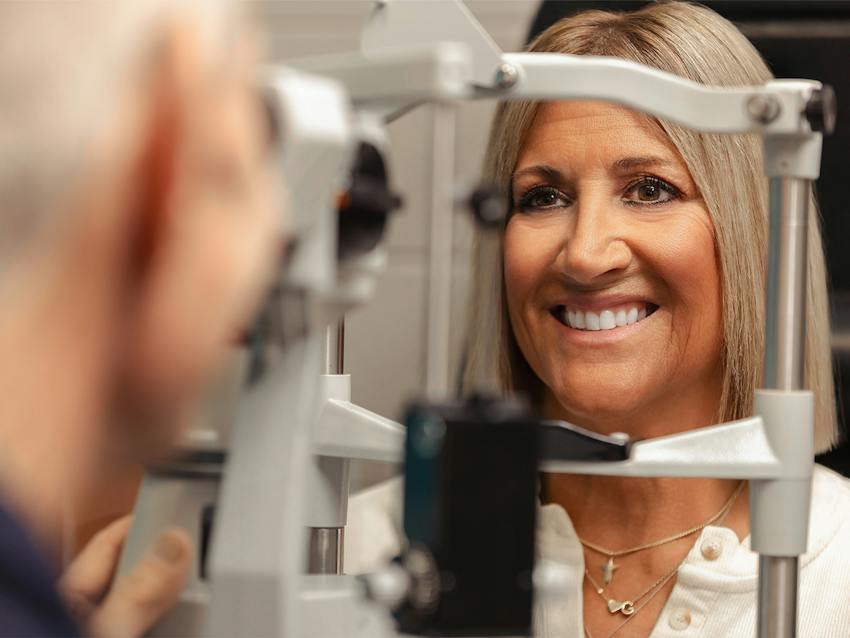
RLE replaces the eye's natural lens with a premium intraocular lens, correcting a wide range of refractive errors while simultaneously eliminating the possibility of cataracts developing in the future. It uses the same advanced techniques and lens technology as modern cataract surgery and offers the most comprehensive vision correction solution for guests in the presbyopic age range who want clear vision across all distances.
For guests in their forties and beyond who are dealing with presbyopia alongside other refractive needs, RLE is often the most complete and forward-looking vision correction option available. The ability to address near, intermediate, and distance vision simultaneously, while removing cataracts from the future equation entirely, makes it a particularly compelling choice for the right candidate.
Best suited for: Adults 40 and older experiencing presbyopia, significant refractive error, or those who want to proactively address future cataract development.
PRK
PRK
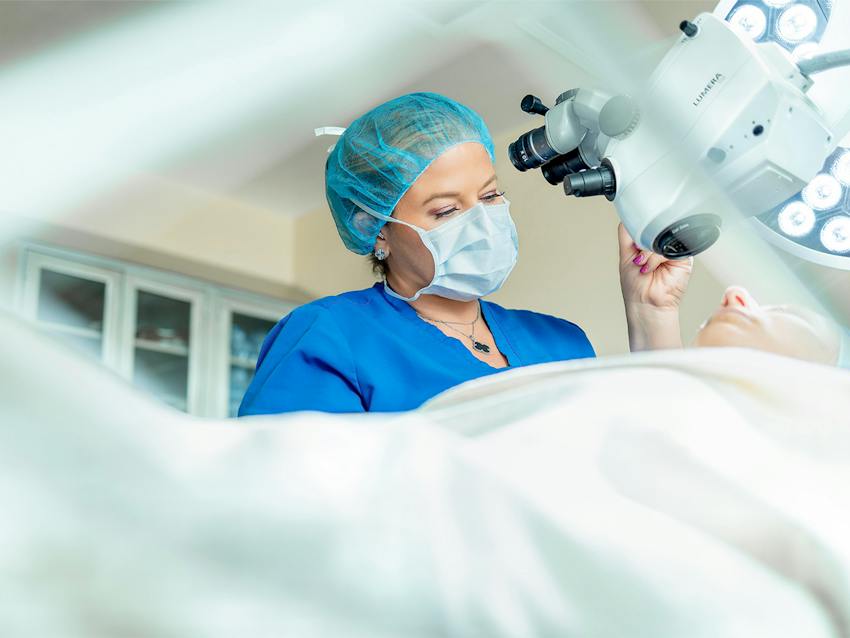
PRK uses the same excimer laser as LASIK to reshape the cornea and correct myopia, hyperopia, and astigmatism, but without creating a corneal flap. Instead, the outermost corneal surface is gently removed, the tissue is treated directly, and the surface regenerates naturally over approximately one week.
PRK is the preferred laser option for guests with thinner or more steeply curved corneas that make flap creation inadvisable, those with occupational restrictions that preclude flap-based procedures, and those who participate in contact sports where a corneal flap could be at risk. Long-term outcomes are equivalent to LASIK, with a slightly longer recovery as the primary tradeoff.
Best suited for: Adults with stable refractive error who aren't ideal LASIK candidates due to corneal considerations, occupational requirements, or lifestyle factors.

Safety, Precision, & Outcomes
Safety, Precision, & Outcomes
When it comes to your vision, there is no room for "good enough,” and at Boling Vision Center, we've never settled for it.

The Pink Elephant in the Room - Addressing Fears & Myths
The Pink Elephant in the Room - Addressing Fears & Myths
If you've been putting off vision correction because something in the back of your mind won't let you say yes, you're not alone.
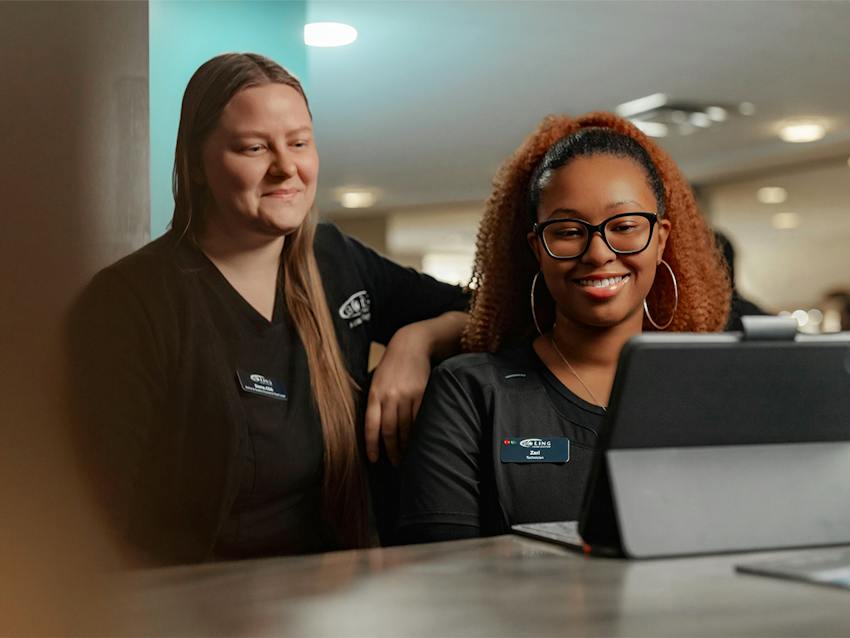
Real People. Real Vision Correction Stories.
Real People. Real Vision Correction Stories.
The decision to pursue vision correction is a personal one, and the experiences of the people who have made it at Boling Vision Center are the most honest account of what that decision looks like in practice.
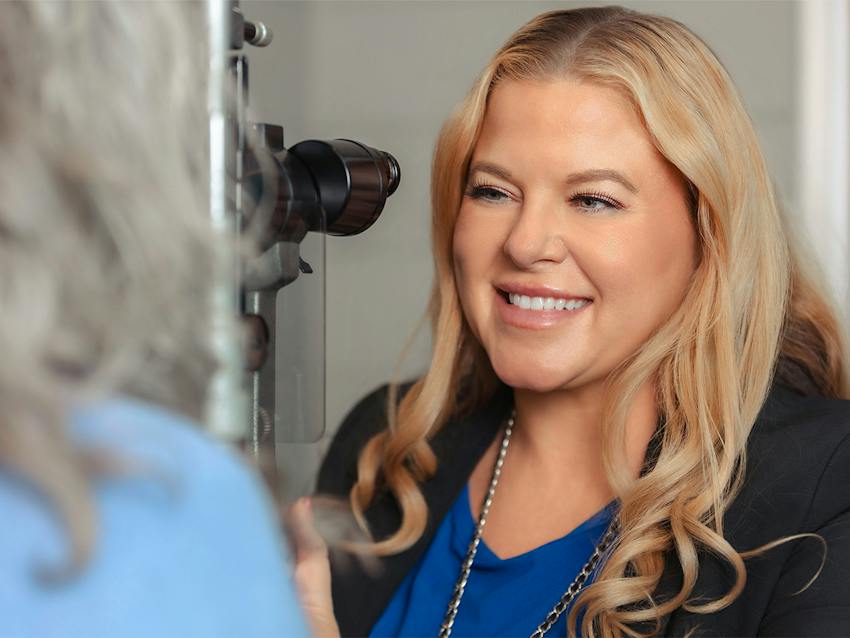
Understanding Cost & Financing
Understanding Cost & Financing
Clearer vision is one of the most meaningful investments you can make in yourself, and Boling Vision Center is committed to making it within reach.
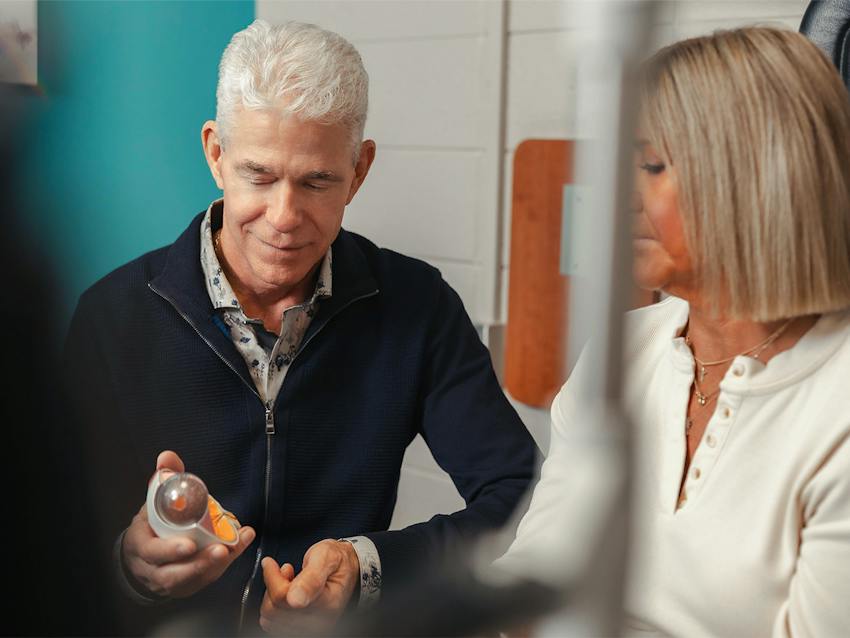
Vision Correction FAQ's
Vision Correction FAQ's
You have questions about vision correction; we've spent decades answering them, and we're happy to start right here.
Why Choose Boling Vision Center for Vision Correction?
Vision correction is one of the most significant elective decisions a person can make, and choosing the right practice to perform it matters enormously. At Boling Vision Center, our Vision Correction Center combines the full range of procedures, advanced technology, experienced surgeons, and the genuine individualized care that a decision of this magnitude deserves.
With our own Joint Commission-certified INSIGHT Surgery Center, four Northern Indiana locations, and over 65 years of trusted community care, we're the vision correction choice Michiana trusts. Amazing happens here.
Frequently Asked Questions Vision Correction Center
How do I know which vision correction procedure is right for me?
The best way to determine which vision correction procedure is right for you is through a comprehensive consultation and evaluation. Your diagnostic findings, prescription, lifestyle, and visual goals all help your provider make an individualized recommendation. No single procedure is universally superior; each has strengths that make it appropriate for different candidates, and your provider's role is to identify the option that best fits your eyes and circumstances.
Are vision correction procedures covered by insurance?
Most standard vision and medical insurance plans do not cover elective vision correction procedures such as LASIK, EVO ICL, PRK, and RLE. However, some plans offer discount benefits for laser vision correction, and FSA and HSA funds can generally be used toward eligible procedures, providing potential tax advantages. Our team can help you understand your specific plan benefits and discuss available financing options during your consultation.
What is the minimum age for vision correction?
Most vision correction procedures require patients to be at least 18 years old and have a stable prescription for at least one to two years. For laser procedures, many surgeons prefer to wait until the mid-twenties, when prescription stability is more reliably established. EVO ICL is FDA-approved for patients between 21 and 45, while RLE is most commonly performed in patients age 40 and older. Your provider will discuss age requirements and candidacy during your consultation.
Is vision correction permanent?
The correction achieved through laser procedures such as LASIK and PRK and implant-based procedures such as EVO ICL and RLE is designed to be long-lasting. However, vision correction does not stop natural age-related changes in the eyes, including presbyopia and cataracts, which can affect near vision and overall clarity later in life. For many patients, the correction achieved remains stable and meaningful for many years.
What if I'm not a candidate for any vision correction procedure?
Some patients may not be candidates for vision correction at the time of their consultation. If that happens, our team will explain the reasons clearly and discuss whether your candidacy could change over time or whether other options may be appropriate. We do not recommend a procedure for someone who is not a genuinely suitable candidate, regardless of their desired outcome.