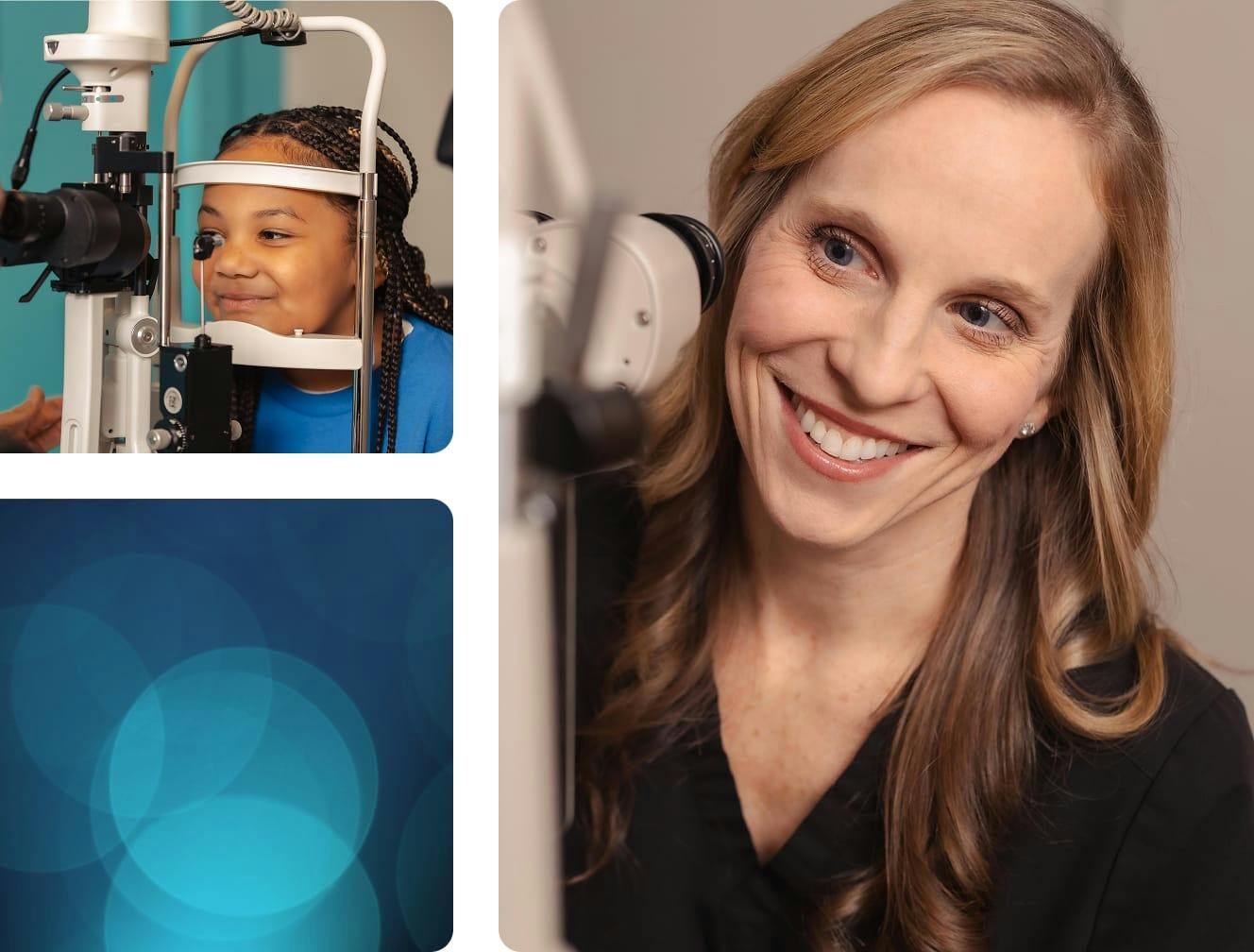
From diagnosis to long-term management, the retina raises a lot of questions; here are honest answers to the ones we hear most often at Boling Vision Center's Medical Retina Center.
Medical Retina FAQs


Your Retina Questions, Answered
The retina is one of the most complex and important structures in the eye, and conditions that affect it can feel overwhelming to navigate. At Boling Vision Center, we believe that understanding your condition is a vital part of managing it well. If your question isn't covered here, reach out or schedule a consultation, and let's talk through it together.
Frequently Asked Questions Medical Retina
What Is the Retina and Why Does It Matter?
The retina is a thin layer of light-sensitive tissue lining the back of the eye. It captures incoming light and converts it into electrical signals that travel through the optic nerve to the brain, where they're interpreted as the images you see. Different regions of the retina handle different aspects of vision. The macula, located at the center, is responsible for sharp detail and color. The peripheral retina handles broader awareness of your surroundings. When any part of the retina is damaged or diseased, the visual consequences depend largely on which region is affected.
What Are the Most Common Retinal Conditions?
Retinal disease takes many forms, but the conditions we see most frequently at Boling Vision Center include age-related macular degeneration, diabetic retinopathy, retinal vein occlusion, macular edema, epiretinal membrane, central serous chorioretinopathy, and retinal tears or detachment. Many of these conditions share risk factors, including age, systemic health conditions like diabetes and high blood pressure, and family history. Some develop gradually over years; others can present suddenly and require urgent care.
How Do I Know If Something Is Wrong With My Retina?
Some retinal conditions cause noticeable symptoms, including blurry or distorted central vision, floaters, flashes of light, a curtain-like shadow across the visual field, or a sudden loss of vision. Others, particularly in their early stages, produce no symptoms at all. This is why regular comprehensive eye exams are so important, even when your vision feels fine. Many retinal conditions are detectable through imaging before they cause any noticeable change in sight, and early detection almost always means more treatment options and better outcomes.
What Should I Do If I Experience Sudden Vision Changes?
Sudden vision changes should always be taken seriously. A dramatic increase in floaters, flashes of light, a shadow or curtain across your vision, or sudden vision loss are all symptoms that warrant urgent evaluation. Contact Boling Vision Center immediately or visit our Emergency Eye Care Center. Conditions like retinal detachment and retinal artery occlusion are time-sensitive emergencies where prompt treatment can make the difference between preserving and permanently losing vision.
What Is a Retinal Exam Like?
A comprehensive retinal evaluation involves dilating your pupils with eye drops to allow your provider a clear view of the retina. Advanced imaging tools, including optical coherence tomography and fundus photography, are used to capture detailed images of the retinal layers and document findings over time. The exam itself is comfortable and straightforward, though your vision will be temporarily blurry after dilation, and you'll need a driver for your appointment. Plan for the full visit to take a couple of hours.
Are Retinal Conditions Hereditary?
Genetics plays a role in several retinal conditions. Age-related macular degeneration, certain macular dystrophies, and some forms of retinal degeneration have meaningful hereditary components. If a close family member has been diagnosed with a retinal condition, earlier and more frequent monitoring is advisable. Your provider will factor your family history into your overall risk assessment and recommend a monitoring schedule that reflects your individual picture.
Can Retinal Damage Be Reversed?
This depends on the condition and how early it's caught. Some retinal conditions, when treated promptly, allow for meaningful vision recovery. Others cause permanent changes that can be stabilized but not reversed. In general, the earlier a retinal condition is detected and treated, the better the chance of preserving existing vision. This is why proactive monitoring and prompt attention to any new symptoms are so important for long-term retinal health.
How Are Retinal Conditions Treated?
Treatment varies widely depending on the condition. Options include intravitreal injections, laser therapy, Valeda light therapy, surgical procedures, and, in some cases, careful monitoring without immediate intervention. Many retinal conditions require ongoing treatment over months or years rather than a single procedure. At Boling Vision Center, we build long-term care relationships with our retinal guests, adjusting treatment plans as conditions evolve and new options become available.
Do I Need a Referral to Be Seen at the Medical Retina Center?
Not necessarily. Guests are welcome to schedule directly with Boling Vision Center for a retinal evaluation. We also receive referrals from primary care providers, optometrists, and other specialists throughout the region. If you've been referred by another provider, our team will coordinate closely with them to ensure continuity of care and clear communication throughout your treatment.
Will I Need to Be Seen at One Location Specifically?
Boling Vision Center's Medical Retina Center services are available across our Northern Indiana locations. Shared records and consistent care protocols mean your team is always working from a complete picture of your history, regardless of which location you visit. For guests managing a long-term retinal condition, that consistency and flexibility matter. We want your care to fit your life, not the other way around.
Why Choose Boling Vision Center?
Boling Vision Center's Medical Retina Center offers advanced diagnostic technology, a full range of treatment options, and experienced providers who are genuinely invested in long-term outcomes for every guest.
Retinal care requires patience, precision, and a team that stays with you over time. That's exactly what we offer, across four Northern Indiana locations and backed by over 65 years of trusted community care.
When your vision depends on getting it right, Boling is the practice Northern Indiana trusts. Amazing happens here.