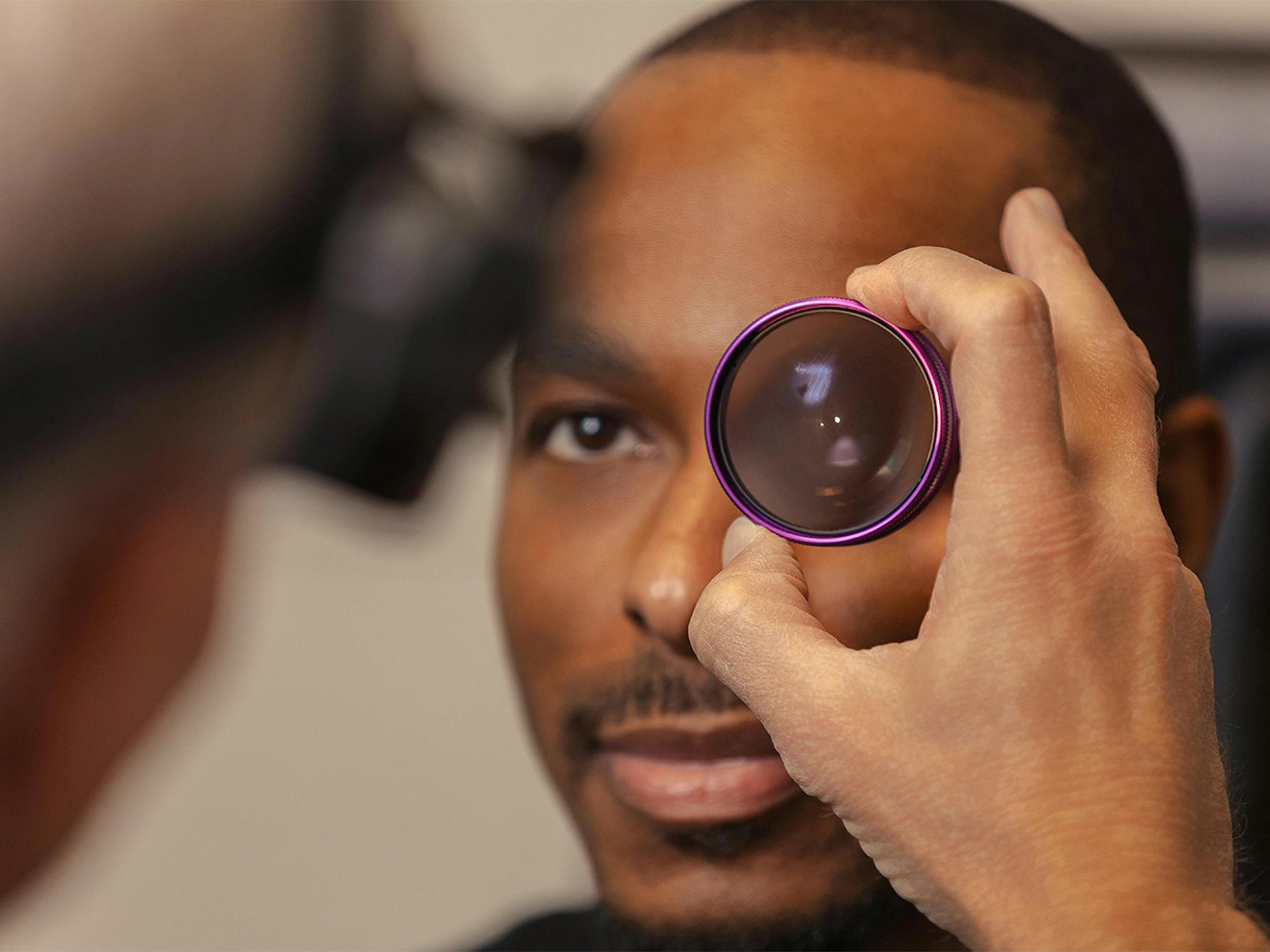
When the Window Gets Cloudy Understanding Corneal Scarring and Trauma

The cornea has a remarkable capacity to heal from minor injuries, but more significant damage, whether from a scratch, chemical exposure, infection, or prior surgery, can leave behind scarring that permanently affects the way light enters the eye. At Boling Vision Center's Cornea & Ocular Surface Center, we specialize in evaluating corneal trauma and scarring with precision, and in building care plans that address both the underlying cause and its impact on your vision.

If you've experienced an eye injury or notice changes in your vision, don't wait: schedule a corneal evaluation at any of our four Northern Indiana locations.

man smiling

How the Cornea Responds to Injury

The cornea is a layered structure with a remarkable capacity to heal from surface-level trauma. Minor scratches to the outermost layer, the epithelium, typically resolve within a few days without leaving permanent changes.

When damage extends deeper into the corneal stroma, however, healing involves the formation of scar tissue. Unlike the highly organized collagen fibers of healthy corneal tissue, scar tissue is irregular and less transparent. That irregularity scatters light rather than allowing it to pass cleanly through, which is what produces the visual disturbance guests often describe as blurriness, haziness, or reduced contrast.

The degree of visual impact depends on several factors: the depth and extent of the injury, its location relative to the visual axis, and how the cornea healed.

Common Causes of Corneal Scarring and Trauma

Corneal scarring can result from a wide range of events and conditions. Some of the most common include:

  • Corneal abrasions and lacerations: Scratches from fingernails, foreign bodies, plant material, or contact lens misuse. Surface abrasions usually heal cleanly; deeper injuries carry a higher risk of scarring.
  • Chemical injuries: Exposure to household cleaners, industrial chemicals, or other caustic substances can cause severe corneal damage. Alkaline burns tend to penetrate more deeply than acid burns and are generally more serious.
  • Foreign body injuries: Metal fragments, debris, or other particles embedded in the cornea can cause direct damage and introduce infection risk, particularly if not removed promptly and properly.
  • Infectious keratitis: Bacterial, viral, fungal, and parasitic infections of the cornea can all result in scarring if severe or inadequately treated. Herpes simplex keratitis is one of the more common causes of corneal scarring from infection.
  • Contact lens-related complications: Overwear, poor hygiene, or sleeping in lenses can lead to corneal hypoxia, microbial keratitis, and, in more serious cases, permanent corneal changes.
  • Corneal dystrophies and degenerations: Certain inherited or age-related conditions cause progressive changes to corneal clarity over time.
  • Prior surgery or procedures: Some guests develop scarring as a complication of prior eye surgery or procedures performed elsewhere.
Banner media

Recognizing the Symptoms

Corneal scarring and trauma don't always produce dramatic symptoms, especially in early or mild cases. Signs that something may be affecting corneal clarity include:

  • Blurry or hazy vision that doesn't fully correct with glasses or contacts
  • Increased sensitivity to light or glare
  • A visible white, gray, or cloudy area on the front of the eye
  • A persistent foreign body sensation
  • Reduced visual contrast or color vibrancy
  • Eye redness, discharge, or discomfort following an injury

Any sudden change in vision following eye trauma warrants prompt evaluation. Early treatment of corneal injuries significantly reduces the likelihood of lasting scarring.

doctor treating a patient | glasses on racks | abstract art

Dr. Walker is amazing. So patient and kind. Now that I am having cataract surgery. I have seen how organized and helpful that part of Boling is. Everything from the literature to individual meetings was so impressive. I thought I would be so worried, but they have done so well in explaining the process, I am excited to get it done!

Shari Herman
Quote Background

How We Evaluate Corneal Scarring

Accurate evaluation guides every treatment decision, and at Boling Vision Center, we use advanced corneal imaging to assess both the extent and depth of any scarring.

Slit-Lamp Examination

A detailed slit-lamp exam allows our providers to directly visualize the corneal layers, assess the location and density of any opacity, and identify signs of active disease or infection that may require treatment before other interventions are considered.

Corneal Topography and Tomography

These imaging modalities map the curvature and thickness of the cornea in fine detail. Scarring can distort the corneal surface in ways that significantly affect vision even when the opacity itself appears limited, and topography helps us understand the full scope of the visual impact.

Optical Coherence Tomography (OCT)

Corneal OCT provides cross-sectional imaging that reveals exactly which layers of the cornea are involved in the scarring, which is essential for determining whether surface-level treatments are appropriate or whether deeper intervention may be needed.

Schedule A Consultation

Contact Us
Contact us media

Treatment Options for Corneal Scarring and Trauma

Treatment depends on the nature, location, and depth of the scarring, as well as its functional impact on vision. At Boling Vision Center, we tailor every care plan to the individual.

Observation and Optical Management

Mild or peripheral scarring that doesn't significantly affect vision may require monitoring rather than active intervention. When scarring does affect vision but isn't severe enough for surgical management, specialty contact lenses, particularly scleral lenses, can vault over the irregular corneal surface and provide substantially improved visual clarity.

Phototherapeutic Keratectomy (PTK)

PTK uses an excimer laser to remove superficial corneal scarring or irregularities precisely. It's most effective when the scarring is limited to the anterior layers of the cornea and can significantly improve both clarity and comfort in the right candidate.

Corneal Transplantation

For deeper or more extensive scarring that causes significant visual impairment, corneal transplantation may offer the best path to restored vision. Modern techniques, including DALK (deep anterior lamellar keratoplasty), which replaces only the affected layers while preserving the guest's own healthy inner cornea, have improved both outcomes and recovery compared to older full-thickness approaches.

Background media

Corneal Trauma When It's an Emergency

Not all corneal injuries can wait for a scheduled appointment. Chemical exposures, penetrating injuries, and foreign bodies lodged in the eye require urgent care. Boling Vision Center's team is available to address urgent corneal injuries, and we encourage anyone who has experienced significant eye trauma to seek care promptly rather than waiting to see if symptoms resolve on their own.

Why Choose Boling Vision Center?

Boling Vision Center's Cornea & Ocular Surface Center brings together advanced diagnostic imaging, the full range of corneal treatment options, and providers who take complex cases seriously. As Northern Indiana's most comprehensive ophthalmology practice, with four locations, an on-site accredited surgery center, and over 65 years of trusted community care, we're equipped to guide you from evaluation through recovery with the expertise and attentiveness your corneal health deserves. Amazing happens here.

man putting on glasses | abstract art | Woman getting her eyes checked

Frequently Asked Questions Corneal Scarring & Trauma

Can corneal scars heal on their own?

Superficial corneal abrasions typically heal without leaving permanent scarring. However, once scar tissue has formed in the deeper corneal layers, it does not resolve on its own. Treatment options depend on the extent and location of the scarring and its impact on vision.

Will corneal scarring always affect my vision?

Not necessarily. Scarring that's located outside the central visual axis or is very faint may have little or no effect on functional vision. Scarring directly over the central cornea, the area that light must pass through to focus on the retina, is more likely to produce noticeable visual symptoms.

How soon should I seek care after a corneal injury?

As soon as possible. Early treatment of corneal trauma, particularly infections, chemical exposures, and foreign bodies, significantly reduces the risk of complications and lasting vision changes. When in doubt, err on the side of being seen promptly.

Is it safe to wear contact lenses with corneal scarring?

It depends on the nature and extent of the scarring. Some guests with corneal scarring do very well with specialty contact lenses, which can improve vision that glasses no longer correct adequately. Others may need to avoid lenses entirely during active healing. Your provider will guide you based on your specific situation.

Can children get corneal scarring?

Yes. Children can experience corneal injuries from the same causes as adults: foreign bodies, infections, and chemical exposures. They should be evaluated promptly after any eye trauma, and early care is especially important in children because untreated vision problems can affect visual development.

Amazing Happens Here

Three generations. One unwavering standard.

Contact Us
Accessibility: If you are vision-impaired or have some other impairment covered by the Americans with Disabilities Act or a similar law, and you wish to discuss potential accommodations related to using this website, please contact our Accessibility Manager at (574) 293-3545.
Contact Us