
Sunglasses are more than a fashion accessory: they are one of the most important tools available for protecting your long-term eye health, and at Boling Vision Center's Optical & Vision Solution Center, we carry the options to keep your eyes protected in style.
Sunglasses
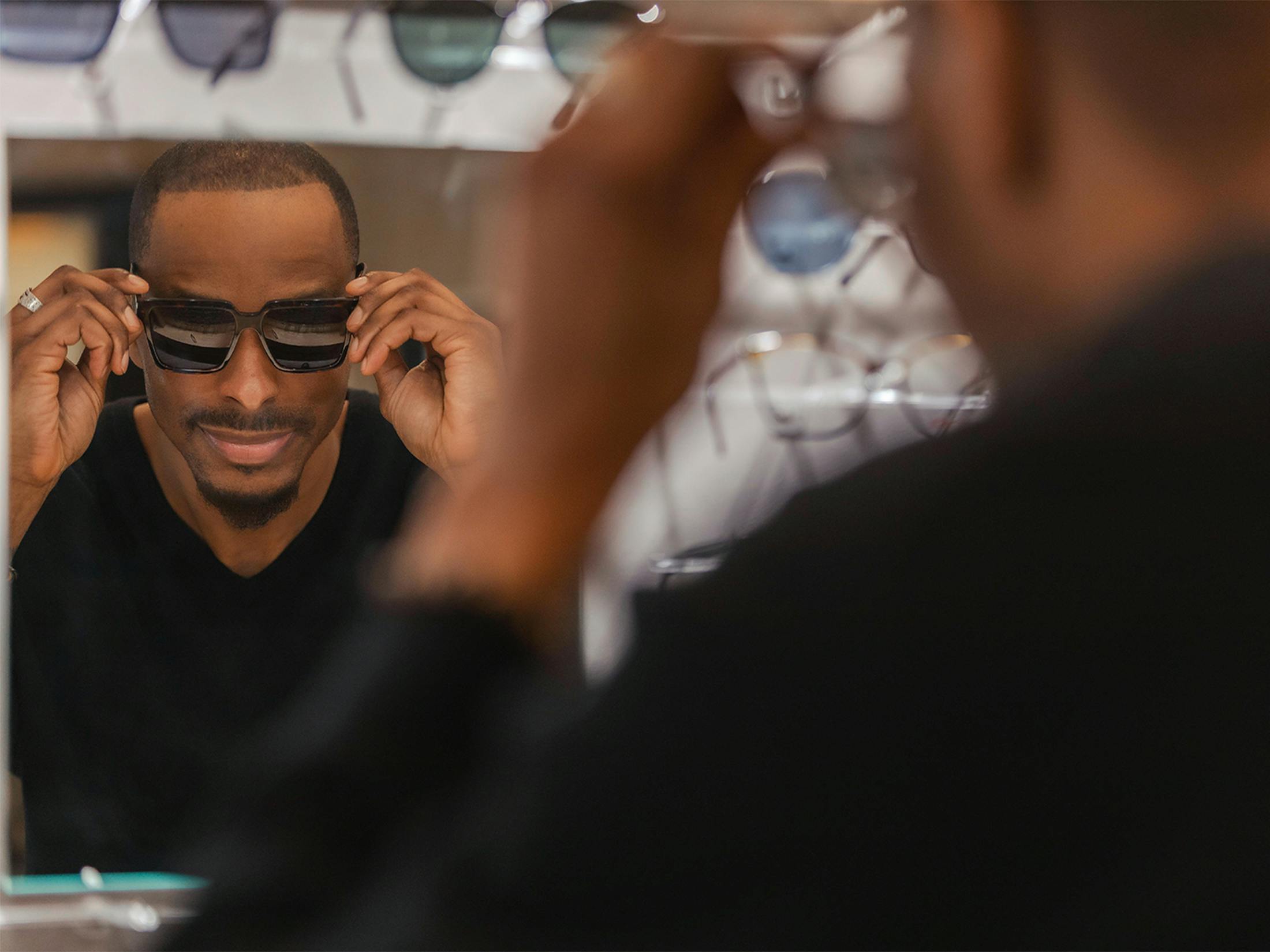

More Than a Fashion Statement
Most people know that UV radiation damages the skin, but far fewer realize that the same rays pose a significant and cumulative threat to the eyes, eyelids, and surrounding tissue. The right pair of sunglasses, worn consistently, is one of the simplest and most effective preventive measures available for long-term eye health.
At Boling Vision Center's INFOCUS Optical departments across all four Northern Indiana locations, our nationally certified opticians help guests find prescription and non-prescription sunglasses that combine genuine UV protection with the style, fit, and optical quality their eyes deserve. Stop into any of our four Northern Indiana locations or use our Virtual Try-On Tool to start exploring your options today.
Why UV Protection Matters
UV radiation is present every day of the year, and its effects on the eyes accumulate silently over a lifetime. Understanding what that exposure actually does helps explain why consistent sun protection is so important.
How UV Radiation Affects the Eyes
The sun emits two types of ultraviolet radiation that affect the eyes: UVA and UVB. Both penetrate the ocular tissues and cause cumulative damage over time, and neither is visible nor detectable without protection in place.
One important and widely underappreciated fact: approximately forty percent of UV exposure occurs on cloudy or overcast days, when most people don't think to reach for sunglasses. UV radiation is present year-round regardless of cloud cover, and the eyes are exposed whenever you're outdoors.
Short-Term Effects: Photokeratitis
Intense UV exposure over a short period can cause photokeratitis, essentially a sunburn of the corneal surface. It most commonly occurs after extended time on snow, water, or sand, where UV radiation is intensified by reflection. Symptoms of photokeratitis include:
- Eye pain and significant redness
- A gritty or foreign body sensation
- Extreme sensitivity to light
- Excessive tearing
- Temporary blurry vision
Photokeratitis symptoms are typically temporary and resolve within a day or two, but the experience is uncomfortable and entirely preventable with appropriate sun protection.
Long-Term Effects of UV Exposure
Repeated UV exposure accumulates over a lifetime and is associated with a meaningfully increased risk of several serious eye conditions:
- Cataracts: UV radiation accelerates the clouding of the eye's natural lens, one of the leading causes of vision impairment worldwide.
- Age-related macular degeneration: Cumulative UV and high-energy visible light exposure contribute to oxidative damage in the macula, the central area of the retina responsible for detailed vision.
- Eyelid skin cancer: The thin skin of the eyelids is particularly vulnerable to UV-related skin cancers, including basal cell carcinoma and squamous cell carcinoma.
- Retinal damage: UV radiation can cause direct damage to the photoreceptor cells of the retina over time.
- Pterygium and pinguecula: UV exposure contributes to the development of these growths on the conjunctival surface, which can affect comfort and vision.
- Premature aging: UV radiation accelerates the breakdown of the delicate skin around the eyes, contributing to premature wrinkling and aging of the periocular tissue.

Glenn PatrickMy experience was wonderful; I was greeted at the door and treated well. The staff and the physician make you feel like you are the only patient they have for the day.

Why Choose Boling Vision Center?
At Boling Vision Center's Optical & Vision Solution Center, sunglass selection is a genuinely personalized experience guided by nationally certified opticians who understand both the protective and optical requirements of quality sun eyewear. With an extensive selection of prescription and non-prescription options, an on-site INFOCUS Optical Lab, and four Northern Indiana locations, we make it easy to protect your eyes without compromising on style or optical quality. Amazing happens here.
Sunglasses Frequently Asked Questions
Do I need sunglasses on cloudy days?
Yes. Approximately forty percent of UV exposure occurs on cloudy or overcast days, when UV radiation penetrates cloud cover and reaches the eyes even without direct sunlight. Wearing UV-protective sunglasses whenever you're outdoors, regardless of cloud cover or season, is the most reliable way to minimize cumulative UV exposure.
Are cheap sunglasses better than no sunglasses?
It depends on whether they provide genuine UV protection. A pair of inexpensive sunglasses with verified 100% UVA and UVB protection is meaningfully better than no sunglasses at all. However, dark lenses without UV protection can actually be worse than no sunglasses, because they cause the pupil to dilate in response to the reduced visible light while doing nothing to block the UV radiation that's still reaching the eye. Always verify that sunglasses provide 100% UV protection regardless of price point.
What is the difference between UV protection and polarization?
UV protection blocks harmful ultraviolet radiation from reaching the eye. Polarization reduces glare from reflective surfaces by filtering horizontally reflected light. The two are separate features: a lens can have UV protection without polarization, and vice versa, though the best outdoor sunglasses provide both. We recommend polarized lenses with full UV protection for most outdoor sunglass applications.
Can I get my existing frames fitted with sunglass lenses?
In many cases, yes. If your current frames are in good condition and the lens shape is compatible with sunglass lens production, our INFOCUS Optical Lab can fit them with tinted or polarized prescription lenses. Bring your frames in, and our opticians will assess whether this is a practical option.
How do I know if my current sunglasses actually block UV radiation?
The most reliable indicator is a label or certification confirming 100% UVA and UVB protection. If your current sunglasses don't have this certification or you're unsure, bring them in, and we can test them. Given the long-term importance of UV protection, it's worth knowing for certain whether your sunglasses are providing the protection you think they are.
