
Your Vision Is Worth Protecting

The connection between diabetes and eye health is one of the most important and most underappreciated relationships in medicine. Elevated blood sugar damages the delicate blood vessels throughout the body, and the blood vessels of the retina are among the most vulnerable. The consequences, ranging from subtle early changes to devastating vision loss, develop silently in many cases, making regular comprehensive eye care not just beneficial but essential for anyone with diabetes.

The encouraging reality is that with appropriate monitoring and timely intervention, the vast majority of diabetes-related vision loss is preventable. Schedule a diabetic eye exam at any of our four Northern Indiana locations today.

How Diabetes Affects the Eyes

Chronically elevated blood sugar damages blood vessels throughout the body, and the retina, with its dense network of tiny capillaries, is particularly vulnerable to that damage. Over time, the structural integrity of these vessels breaks down, causing them to leak, swell, close off, or trigger the growth of new, fragile vessels that cause further damage.

The retina is the light-sensitive tissue lining the back of the eye that converts visual information into signals the brain interprets as sight. When its blood supply is compromised, the consequences for vision can be profound and, without appropriate intervention, permanent. Beyond diabetic retinopathy, diabetes also increases the risk of cataracts, glaucoma, and other ocular conditions, making comprehensive eye care an important part of the overall diabetes management picture.

Banner media

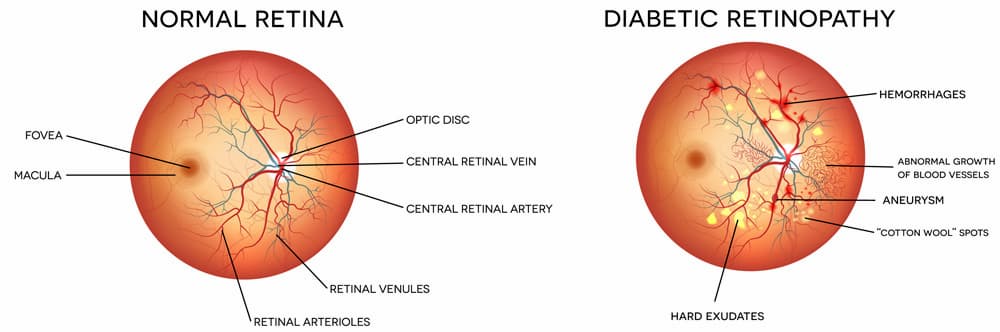
Diabetic Retinopathy graphic

Conditions We Treat

Diabetic eye disease encompasses several related conditions, each with distinct characteristics and treatment approaches.

Diabetic Retinopathy

Diabetic retinopathy is the most common diabetic eye condition and the leading cause of new blindness among working-age adults in the United States. It is estimated that 40 to 45 percent of all Americans with diabetes have some degree of diabetic retinopathy, and 24,000 go blind from it each year. Critically, if diagnosed in time, nearly 90 percent of people with late-stage diabetic retinopathy can be saved from blindness. Diabetic retinopathy progresses through two broad stages.

Diabetic Macular Edema (DME)

Diabetic macular edema is the most common cause of vision loss in people with diabetic retinopathy. It occurs when fluid leaking from damaged retinal vessels accumulates in the macula, causing it to swell and distort central vision. DME can occur at any stage of diabetic retinopathy and requires its own targeted treatment approach.

Nonproliferative Diabetic Retinopathy (NPDR)

NPDR is the earlier stage of diabetic retinopathy and can develop after several years of living with diabetes. As the retinal blood vessels weaken and become more permeable, they develop small bulges called microaneurysms and begin to leak blood and fluid into the surrounding retinal tissue.

In the early stages, NPDR may produce no noticeable symptoms, which is one of the most important reasons annual dilated eye exams are standard of care for anyone with diabetes. As it progresses, guests may notice floaters, blurred vision, or difficulty with color perception. If fluid leaks into the macula, the central vision area of the retina, diabetic macular edema develops, which is one of the most common causes of vision loss in diabetic retinopathy.

Proliferative Diabetic Retinopathy (PDR)

PDR is the advanced stage of diabetic retinopathy and represents a significant escalation in both disease severity and vision threat. As areas of the retina are deprived of adequate blood supply, the eye responds by attempting to grow new blood vessels in a process called neovascularization. These new vessels are fragile and abnormally structured, prone to bleeding into the vitreous and causing sudden, dramatic vision loss.

Retinal detachment is another serious complication of PDR, occurring when scar tissue associated with the abnormal vessel growth pulls the retina away from the back of the eye. Without prompt surgical intervention, retinal detachment causes permanent, severe vision loss.

Schedule A Consultation

Contact Us
Contact us media
smiling man

Symptoms of Diabetic Eye Disease

One of the most important and most dangerous characteristics of diabetic eye disease is that it often produces no symptoms in its early stages. By the time vision changes become noticeable, significant, and sometimes irreversible damage may have already occurred. Symptoms that do develop can include:

  • Blurry or fluctuating vision
  • Floaters or dark spots in the visual field
  • Difficulty seeing clearly at night
  • Colors appearing washed out or faded
  • A dark or empty area in the central visual field
  • Sudden vision loss

Any sudden change in vision in a guest with diabetes should be evaluated immediately, as it may signal a serious complication such as vitreous hemorrhage or retinal detachment.

Everyone was kind, efficient, and patient.

Christine Lantz
Quote Background

How We Diagnose Diabetic Eye Disease

Accurate, thorough diagnosis is the foundation of effective diabetic eye care. At Boling Vision Center's Medical Retina Center, we use a comprehensive suite of advanced diagnostic tools to detect and characterize diabetic eye disease with precision.

Dilated Retinal Examination

A thorough dilated examination of the retina is the cornerstone of diabetic eye care, allowing our providers to directly visualize the retinal blood vessels, identify microaneurysms, hemorrhages, exudates, and areas of neovascularization, and assess the overall health of the retina and macula.

Optical Coherence Tomography (OCT)

OCT provides detailed cross-sectional imaging of the retinal layers, allowing precise characterization of diabetic macular edema, subretinal fluid, and other structural changes that affect vision and guide treatment decisions.

OCT Angiography (OCTA)

OCTA provides non-invasive, high-resolution imaging of the retinal and choroidal vasculature, allowing visualization of areas of capillary dropout, microaneurysms, and early neovascularization without the need for dye injection.

Fluorescein Angiography

In select cases, fluorescein angiography provides detailed mapping of retinal blood flow, identifying areas of leakage, ischemia, and abnormal vessel growth that inform treatment planning for more advanced disease.

Retinal Photography

High-resolution retinal photography provides a detailed, documentable record of the retina's appearance at each visit, allowing precise comparison over time to track disease progression or treatment response.

Background media

Treatment Options

Treatment for diabetic eye disease depends on the stage and type of condition present. At Boling Vision Center, we offer the full range of current evidence-based treatments and tailor every care plan to the individual guest's disease status and clinical needs.

Monitoring and Medical Management

For guests with early NPDR and no macular edema, the primary approach is careful monitoring combined with optimization of systemic diabetes management. Controlling blood sugar, blood pressure, and cholesterol is the single most powerful intervention available for slowing the progression of diabetic retinopathy, and our team works closely with guests' primary care and endocrinology providers to ensure that systemic management and eye care are aligned.

Anti-VEGF Injections

Anti-VEGF injections are the primary treatment for diabetic macular edema and proliferative diabetic retinopathy. By blocking the vascular endothelial growth factor that drives abnormal vessel growth and vascular leakage, anti-VEGF therapy reduces macular swelling, stabilizes or improves vision, and, in PDR, can cause regression of neovascularization.

Injections are administered in the office under topical anesthesia and are generally well tolerated. The treatment schedule is determined by disease activity and treatment response, and regular follow-up is essential to ensure optimal outcomes.

Laser Treatment

Laser photocoagulation has been a mainstay of diabetic retinopathy treatment for decades and remains an important tool for managing proliferative disease and certain patterns of macular edema. Panretinal photocoagulation reduces the stimulus for neovascularization in PDR by treating areas of ischemic retina, while focal laser treatment targets specific leaking vessels in some cases of macular edema.

Surgical Treatment

For guests with advanced PDR complicated by vitreous hemorrhage or tractional retinal detachment, surgical intervention may be required. Vitrectomy surgery removes blood from the vitreous cavity and addresses the fibrovascular membranes causing tractional detachment, offering the possibility of meaningful visual recovery in appropriate cases. Surgical cases are managed in coordination with our retinal surgery team.

Prevention and Proactive Care

The most powerful tool for preventing diabetic vision loss is a combination of excellent systemic diabetes management and consistent, regular eye care.

Control Your Blood Sugar

The relationship between blood sugar control and diabetic retinopathy risk is well established: the better controlled the blood sugar, the lower the risk of developing retinopathy and the slower its progression. This applies equally to Type 1 and Type 2 diabetes.

Annual Dilated Eye Exams

Annual dilated eye exams are the standard of care for every person with diabetes, regardless of how long they have had the condition or how well controlled their blood sugar is. These exams detect changes before symptoms develop and allow treatment to be initiated at the earliest, most effective stage.

Know Your Risk

Length of time with diabetes, degree of blood sugar control, blood pressure, cholesterol levels, and kidney disease are all factors that affect diabetic retinopathy risk. Understanding your personal risk profile, in partnership with both your eye care and primary care providers, is the foundation of a proactive approach to protecting your vision.

Background media

Why Choose Boling Vision Center?

Boling Vision Center's Medical Retina Center combines advanced diagnostic imaging, the full range of diabetic eye disease treatments, and providers trained to coordinate care across the full spectrum of diabetic ocular complications. 

With four Northern Indiana locations, over 65 years of trusted community care, and a genuine commitment to the whole-person approach that complex chronic disease demands, we're the practice guests with diabetes trust to protect their vision for the long term. Amazing happens here.

Richard Boling II

Frequently Asked Questions Diabetic Eye Disease

How often should I have my eyes examined if I have diabetes?

Annual dilated eye exams are the standard recommendation for all people with diabetes, regardless of type, duration, or current blood sugar control. Guests with existing diabetic retinopathy or macular edema are typically seen more frequently, depending on disease severity and treatment status. Your provider will recommend the appropriate schedule for your individual situation.

Can diabetic retinopathy be reversed?

Early diabetic retinopathy can sometimes improve with better blood sugar control, and anti-VEGF treatment for diabetic macular edema can produce meaningful vision improvement in many guests. However, damage from advanced retinopathy, including areas of retinal scarring or significant vision loss from retinal detachment, is generally not reversible. This is why early detection and treatment are so critical.

I have diabetes, but my vision seems fine. Do I still need an eye exam?

Yes, absolutely. Diabetic retinopathy often produces no symptoms until it has reached an advanced and potentially irreversible stage. The absence of symptoms is not reassurance that the retina is healthy. Annual dilated eye exams are essential for detecting changes before they affect vision, when treatment is most effective.

Will I go blind from diabetic retinopathy?

Not necessarily, and with appropriate care, most people with diabetic retinopathy do not lose their vision significantly. The statistics are encouraging: nearly 90 percent of people with late-stage diabetic retinopathy can be saved from blindness when diagnosed and treated in time. Consistent eye care and good systemic diabetes management are the most powerful tools available for protecting long-term vision.

How does blood sugar control affect my eye health?

Blood sugar control is the single most important modifiable factor in diabetic retinopathy risk and progression. Even modest improvements in HbA1c levels have been shown to meaningfully reduce the risk of developing retinopathy and slow its progression in those who already have it. Every improvement in systemic control is a direct investment in the long-term health of your eyes.

Can I have cataract or glaucoma surgery if I have diabetic retinopathy?

In many cases, yes, though the timing and approach require careful coordination. Active or advanced diabetic retinopathy may need to be stabilized before other surgical procedures are performed. At Boling Vision Center, the full range of ophthalmic surgical services is available within one practice, allowing for the coordinated, comprehensive care that complex cases require.

Amazing Happens Here

Three generations. One unwavering standard.

Contact Us
Accessibility: If you are vision-impaired or have some other impairment covered by the Americans with Disabilities Act or a similar law, and you wish to discuss potential accommodations related to using this website, please contact our Accessibility Manager at (574) 293-3545.
Contact Us