When the Body's Defense System Affects Your Vision

Inflammatory and autoimmune-related eye diseases represent some of the most complex conditions we manage at Boling Vision Center's Cornea & Ocular Surface Center. These are conditions where the immune system, rather than protecting the eye, becomes a source of damage, driving inflammation that can threaten vision if not identified and treated with precision. The stakes are high, the presentations are varied, and getting the diagnosis right matters enormously.

If you're experiencing eye inflammation, have a known autoimmune condition, or have been told your symptoms don't have a clear explanation, our team is ready to take a closer look and get you the answers you deserve.

Understanding Ocular Inflammation

Inflammation is the immune system's natural response to injury, infection, or perceived threat. In the eye, that response can be triggered by infection, systemic disease, or an immune system that has begun mistakenly targeting the body's own tissues. When inflammation occurs in or around the eye, it can affect virtually any ocular structure: the cornea, conjunctiva, uvea, sclera, or retina. The location and nature of the inflammation largely determine the symptoms it produces and the approach needed to manage it.

What makes inflammatory and autoimmune eye disease particularly challenging is that the eye is often not the only organ involved. Many of the conditions we treat in this space are manifestations of systemic disease, meaning what's happening in the eye may be a window into what's happening throughout the body. At Boling Vision Center, we're trained to look for those connections and coordinate care accordingly.

Banner media

Conditions We Treat

Inflammatory and autoimmune-related eye disease encompasses a broad range of conditions. The following are among those we most commonly evaluate and manage.

Uveitis

Uveitis is inflammation of the uvea, the middle layer of the eye comprising the iris, ciliary body, and choroid. It can affect one or all of these structures and may be acute or chronic, unilateral or bilateral. Symptoms typically include eye pain, redness, light sensitivity, and blurred vision, though some forms of uveitis can be largely asymptomatic while still causing significant damage.

Uveitis can be infectious in origin, but it is also strongly associated with systemic autoimmune and inflammatory conditions, including ankylosing spondylitis, sarcoidosis, inflammatory bowel disease, and juvenile idiopathic arthritis, among others. Identifying the underlying cause is essential to choosing the right treatment and preventing recurrence.

Scleritis and Episcleritis

The sclera is the white outer coat of the eye. Scleritis is a serious inflammatory condition affecting the sclera itself, often associated with systemic autoimmune disease. It typically presents with deep, boring eye pain, redness, and tenderness, and it requires prompt treatment to prevent structural complications. Episcleritis is a milder, more superficial inflammation of the tissue overlying the sclera. While less serious than scleritis, it can be uncomfortable and recurrent, and in some cases signals underlying systemic disease.

Peripheral Ulcerative Keratitis (PUK)

Peripheral ulcerative keratitis is a sight-threatening condition involving inflammation and ulceration at the peripheral cornea. It is strongly associated with systemic vasculitic and autoimmune diseases, including rheumatoid arthritis and granulomatosis with polyangiitis. PUK requires urgent evaluation and often systemic immunosuppressive treatment in coordination with a rheumatologist or other specialist.

Ocular Cicatricial Pemphigoid

Ocular cicatricial pemphigoid is a rare but serious autoimmune condition that causes progressive scarring of the conjunctiva. Over time, this scarring can lead to symblepharon formation, eyelid abnormalities, corneal damage, and severe dry eye. Early diagnosis and aggressive management are critical to slowing progression.

Stevens-Johnson Syndrome

Stevens-Johnson syndrome is a severe mucocutaneous reaction, most commonly triggered by medications or infections, that can cause devastating ocular surface damage. Acute-phase ocular involvement requires urgent intervention, and the chronic ocular sequelae, including severe dry eye, corneal scarring, and lid margin disease, require long-term specialized management.

Thyroid Eye Disease

Thyroid eye disease is an autoimmune condition associated with thyroid dysfunction, most commonly Graves' disease, in which immune-mediated inflammation affects the tissues of the orbit and eyelids. Ocular manifestations include proptosis, eyelid retraction, double vision, and in severe cases, compressive optic neuropathy. Management requires close coordination between ophthalmology and endocrinology.

Ocular Rosacea

Rosacea is a chronic inflammatory skin condition that frequently affects the eyes, causing eyelid inflammation, meibomian gland dysfunction, conjunctival injection, and corneal involvement in more severe cases. Ocular rosacea is often underrecognized and undertreated, particularly in guests who may not have a formal rosacea diagnosis.


My entire experience this morning was wonderful. Well, as wonderful as an eye exam can be.

Chuck Gooding
Quote Background

Dry Eye Associated with Systemic Autoimmune Disease

Systemic autoimmune conditions, particularly Sjögren's syndrome, rheumatoid arthritis, and lupus, are frequently associated with significant dry eye disease driven by immune-mediated destruction of the lacrimal and meibomian glands. Managing dry eye in this context requires an understanding of the underlying systemic disease and often a more aggressive treatment approach than standard dry eye management.

The Connection Between Eye Inflammation and Systemic Disease

One of the most important aspects of inflammatory eye care is recognizing that the eye rarely exists in isolation from the rest of the body. At Boling Vision Center, our providers are trained to look beyond the eye itself when evaluating inflammatory conditions. A guest presenting with uveitis may have an undiagnosed spondyloarthropathy. Someone with peripheral ulcerative keratitis may have active systemic vasculitis requiring urgent rheumatologic care.

Ocular surface scarring may be the first sign of a systemic pemphigoid condition. We take a whole-person approach to these cases, communicating with primary care physicians, rheumatologists, dermatologists, and other specialists as needed to ensure that what's happening in the eye is being evaluated in the context of the guest's overall health.

Banner media

How We Diagnose Inflammatory & Autoimmune Eye Disease

Accurate diagnosis in this space requires both clinical expertise and the right diagnostic tools.

Comprehensive Slit-Lamp Evaluation

A detailed slit-lamp examination is the foundation of inflammatory eye disease evaluation, allowing our providers to assess the anterior segment structures for signs of active inflammation, structural damage, and disease progression.

Anterior Segment and Posterior Segment Imaging

Depending on the condition and structures involved, we may use anterior segment OCT, fundus photography, fluorescein angiography, or other imaging modalities to characterize inflammation, monitor disease activity, and assess for complications.

Corneal and Ocular Surface Assessment

For conditions affecting the corneal or conjunctival surface, we use corneal topography, vital dye staining, and other surface diagnostic tools to evaluate the extent of involvement and guide treatment planning.

Coordination with Systemic Workup

Many inflammatory eye conditions require laboratory testing and systemic evaluation to identify or monitor underlying disease. We work closely with the guest's broader care team to ensure that the systemic picture is being appropriately investigated alongside the ocular findings.

Treatment Approaches

Management of inflammatory and autoimmune-related eye disease is highly individualized and often requires a combination of local and systemic therapies.

Topical Anti-Inflammatory Therapy

For many conditions, topical corticosteroids or other anti-inflammatory drops are a primary component of treatment, reducing acute inflammation and helping to protect ocular structures during flares.

Systemic Immunosuppression

Conditions with significant systemic involvement or those that don't respond adequately to topical therapy may require systemic corticosteroids or steroid-sparing immunosuppressive agents. We coordinate closely with the appropriate specialists when systemic treatment is part of the plan.

Ocular Surface Rehabilitation

For guests with chronic inflammatory conditions that have damaged the ocular surface, restoring and maintaining surface health is an ongoing priority. This may involve specialty contact lenses, amniotic membrane therapy, punctal occlusion, and other targeted interventions from our cornea and ocular surface toolkit.

Surgical Intervention

Some complications of inflammatory and autoimmune eye disease, including corneal scarring, symblepharon, or structural damage to other ocular tissues, may ultimately require surgical management. With an on-site accredited surgery center, Boling Vision Center is equipped to provide that care when needed.

Background media

Why Choose Boling Vision Center?

Inflammatory and autoimmune eye disease demands a level of diagnostic depth and clinical coordination that not every practice can offer. At Boling Vision Center, our providers are trained to recognize the systemic connections that these conditions carry, and to manage them with the attentiveness and precision they require.

With advanced diagnostics, an on-site surgery center, and a culture built around treating the whole person, we're the practice Northern Indiana trusts for complex eye care. Amazing happens here.

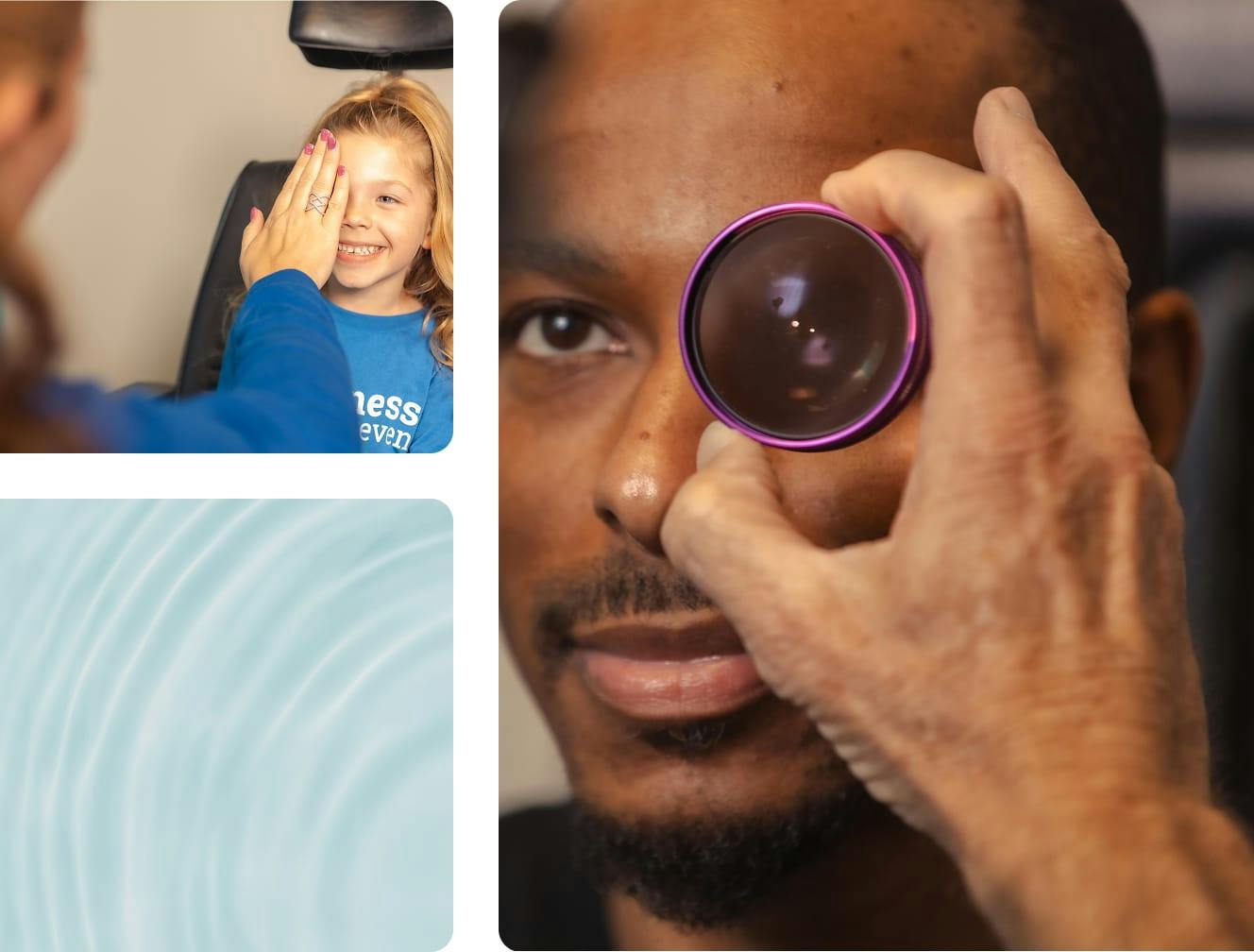
man getting his eye checked | child getting her eye checked | abstract art

Frequently Asked Questions Inflammatory & Autoimmune-Related Eye Disease

How do I know if my eye inflammation is autoimmune in origin?

Distinguishing autoimmune from infectious or other causes of eye inflammation requires a thorough clinical evaluation and, in many cases, laboratory testing and systemic workup. Some patterns of inflammation are strongly associated with specific autoimmune conditions, while others require more investigation. This is one of the reasons a comprehensive evaluation is so important, rather than treating symptoms alone.

Can autoimmune eye disease cause permanent vision loss?

Yes, if left untreated or inadequately managed, many inflammatory and autoimmune eye conditions can cause structural damage that permanently affects vision. This is particularly true for conditions like uveitis, scleritis, peripheral ulcerative keratitis, and ocular cicatricial pemphigoid. Early, aggressive treatment significantly reduces the risk of lasting vision loss.

Do I need to see a rheumatologist as well as an eye doctor?

For many autoimmune eye conditions, yes. Co-management between ophthalmology and rheumatology, or other relevant specialists, is often essential to achieving good outcomes. At Boling Vision Center, we actively facilitate that coordination rather than managing the eye in isolation.

Can inflammatory eye disease come back after treatment?

Many inflammatory eye conditions are chronic and relapsing by nature, meaning flares can occur even after a period of good control. Ongoing monitoring and a clear plan for managing recurrences are important parts of long-term care for these conditions.

I have an autoimmune condition diagnosed by my rheumatologist. Should I have my eyes checked even if I have no eye symptoms?

Yes, and this is important. Many autoimmune-related eye conditions, including certain forms of uveitis, can cause significant damage before producing noticeable symptoms. Regular eye evaluations are recommended for guests with systemic autoimmune disease, and the frequency depends on the specific condition and its known ocular risks. Your rheumatologist and eye care provider should be communicating about this.

Amazing Happens Here

Three generations. One unwavering standard.

Contact Us
Accessibility: If you are vision-impaired or have some other impairment covered by the Americans with Disabilities Act or a similar law, and you wish to discuss potential accommodations related to using this website, please contact our Accessibility Manager at (574) 293-3545.
Contact Us