Lenses Designed for How You Actually See

Standard single-vision and progressive lenses serve most guests well for everyday use, but they aren't always the best solution for every situation. Whether you spend long hours at a computer, play golf competitively, have a strong prescription that standard lenses handle poorly, or experience double vision or significant digital eye strain, there's likely a specialty lens option that can meaningfully improve your visual experience.

At Boling Vision Center's INFOCUS Optical departments across all four Northern Indiana locations, our nationally certified opticians help guests identify and fit the specialty lenses best suited to their prescription, lifestyle, and visual demands. Stop into any of our four Northern Indiana locations to discuss specialty lens options with one of our opticians.

Specialty Lens Options

Our INFOCUS Optical departments carry a comprehensive range of specialty lenses covering the following categories.

Occupational Lenses

Occupational lenses are multifocal lenses specifically designed for the intermediate and near viewing distances most relevant to the workplace. Unlike standard progressive lenses, which emphasize distance and near vision, occupational lenses provide a wider, more comfortable zone of clear vision across the range of distances typical of desk work and other occupational tasks, generally from around two to fifteen feet in all directions.

They are an excellent solution for guests who find that their everyday progressive lenses don't provide fully comfortable vision during extended periods of desk work, screen use, or other close-range occupational tasks.

Computer Lenses

Computer vision syndrome is a recognized condition affecting a significant proportion of screen users, producing symptoms including eye strain, blurry vision, headaches, dry eyes, and redness from prolonged monitor use. Computer-specific lenses are designed to reduce glare from screens, optimize the prescription for typical monitor viewing distance, and minimize the sustained visual effort that drives digital eye strain.

We carry Shamir Office™ lenses, a leading occupational lens option specifically engineered for the visual demands of computer-based work environments.

Anti-Fatigue Lenses

Anti-fatigue lenses are designed for guests who experience eye discomfort, end-of-day blurry vision, heaviness, or headaches from sustained near-focus tasks, including screen use, reading, and other close work. They incorporate a small amount of additional power in the lower portion of the lens to support the focusing muscles during sustained near tasks, reducing the effort required to maintain clear near vision over time.

They are particularly useful for younger guests who don't yet need a full progressive lens but are experiencing symptoms of accommodative fatigue from prolonged near work.

BluTech® Lenses

BluTech lenses filter high-energy blue light from both indoor sources, including electronic screens and fluorescent lighting, and outdoor sunlight, while maintaining natural color perception and reducing glare. They are designed for guests who spend significant time in screen-intensive environments and want a comprehensive blue light filtering solution that performs across both indoor and outdoor conditions.

BluTech lenses may also offer long-term protective benefits, as high-energy blue light exposure has been associated with cumulative oxidative stress in the retina.

Golf Lenses

Specialty golf lenses are designed to optimize vision across the three primary viewing distances relevant to the game: up close for scorecard and yardage guide reading, intermediate for addressing the ball, and distance for tracking the ball in flight and reading the fairway and green.

Beyond their multifocal design, golf lenses can incorporate UV protection, scratch resistance, polarization, and contrast-enhancing tints that improve visibility of the ball against sky and fairway backgrounds. They won't guarantee a lower score, but they'll ensure that your vision isn't the limiting factor.

Polycarbonate Lenses

Polycarbonate is the material of choice for safety eyewear, sports glasses, and children's glasses. It is significantly more impact-resistant than standard lens materials, lightweight, and provides inherent UV protection without the need for an additional coating.

For active guests, young patients, and anyone whose eyewear is exposed to demanding conditions, polycarbonate lenses offer a combination of protection and performance that standard materials can't match.

High-Index Lenses

For guests with strong prescriptions, standard lens materials can produce thick, heavy lenses that are cosmetically unflattering and physically uncomfortable, and that limit the range of frames in which the prescription can be attractively made.

High-index lenses bend light more efficiently than standard materials, allowing the same prescription to be produced in a significantly thinner and lighter lens. The higher the index, the thinner the result, and our opticians will recommend the appropriate index for each guest's prescription and chosen frame.

Prism Correction Lenses

Prism correction lenses are prescribed for guests who experience double vision, or diplopia, resulting from a misalignment in how the two eyes work together. By incorporating a prismatic element into the lens that redirects light before it reaches the eye, prism lenses help the visual system achieve single, comfortable binocular vision without the effort and strain of compensating for the misalignment.

They are an important optical tool for guests with certain forms of strabismus, binocular vision dysfunction, or neurological conditions affecting eye alignment.

Background media
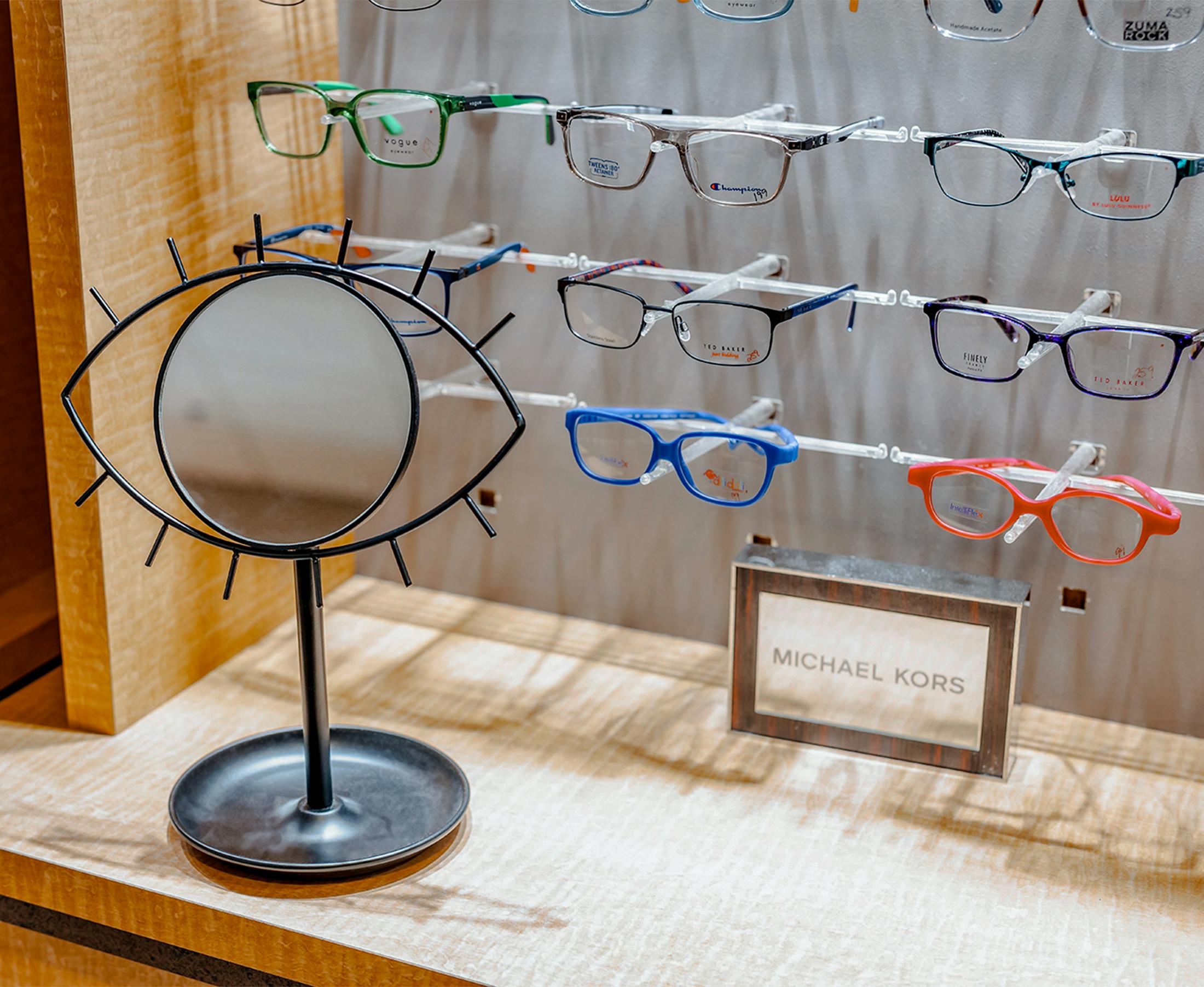
Glasses on display

Techniques for Reducing Lens Thickness

For guests with strong prescriptions, our INFOCUS Optical Lab employs specific finishing techniques to further minimize lens thickness and improve the cosmetic appearance of the finished glasses:

  • Knife Edge: A thinning process applied to high-prescription lenses that reduces the edge thickness for a cleaner, more refined appearance in the chosen frame.
  • Roll & Polish: A finishing technique that smooths and minimizes the sharp edges of lenses, reducing visible thickness and improving the overall aesthetic of the finished pair.

Our opticians discuss these options with guests who have prescriptions where they're most beneficial and help determine the best combination of lens material, index, and finishing technique for each situation.

First appointment of the day. Everyone was friendly and got me in and out in no time!

Tammy G.
Quote Background

Virtual Try-On

For guests who want to explore frame options from home before visiting the office, our Virtual Try-On Tool allows you to browse thousands of frames and see how they look on your own face.

Our opticians are also available virtually to discuss specialty lens recommendations and answer any questions before your appointment.

Why Choose Boling Vision Center?

At Boling Vision Center's Optical & Vision Solution Center, specialty lens selection is a genuinely personalized process guided by nationally certified opticians with the expertise to match every guest with the lens solution that best serves their visual needs. With an on-site INFOCUS Optical Lab, four Northern Indiana locations, and a team that takes the details seriously, we deliver eyewear that performs as well as it looks. Amazing happens here.

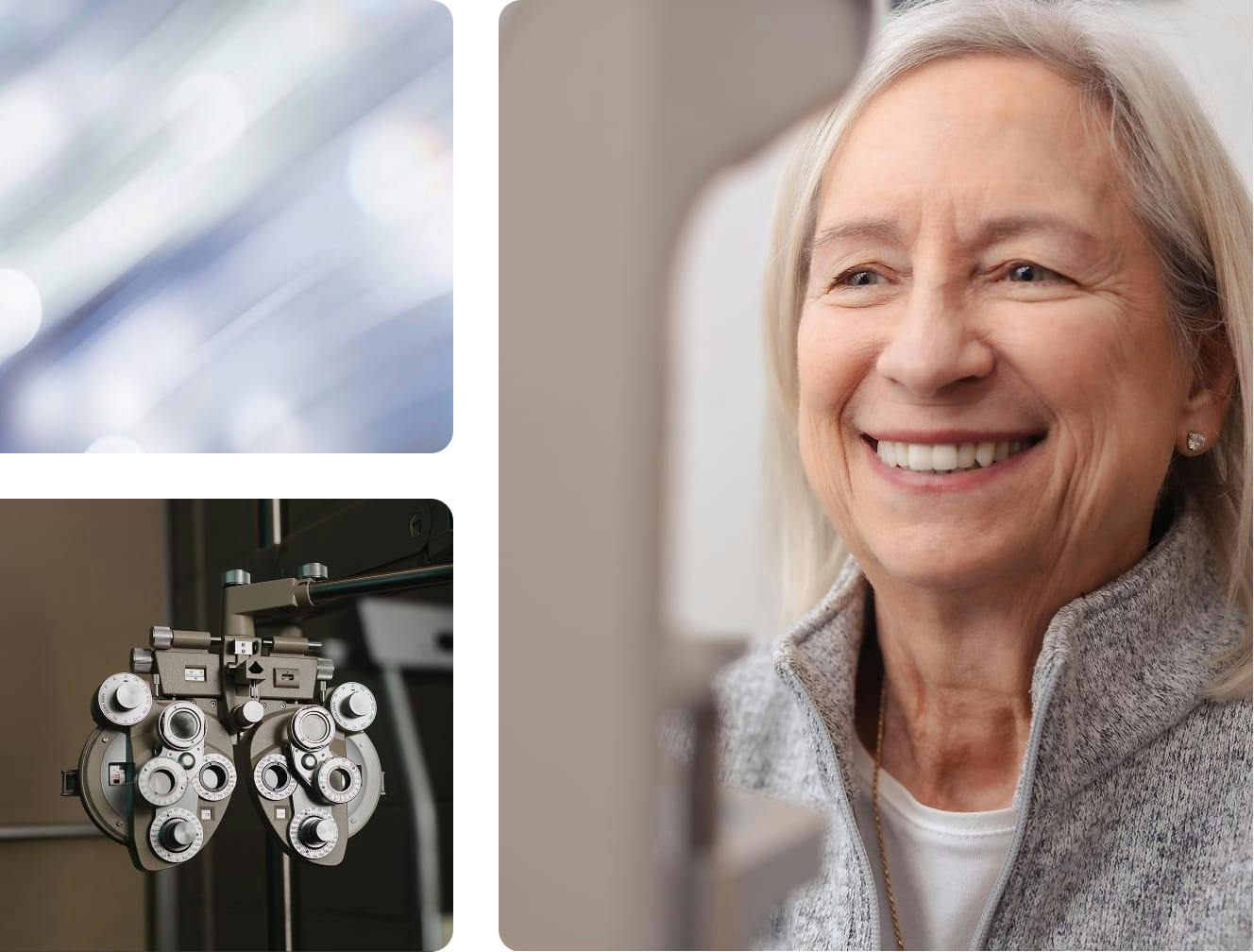
older woman smiling | abstract art | phoropter

Specialty Lenses Frequently Asked Questions

How do I know if I need specialty lenses?

If you experience eye strain, headaches, or blurry vision during specific activities, find that your current lenses don't provide fully comfortable vision across all your daily visual demands, or have a strong prescription that hasn't been well served by standard lenses, a specialty lens option may make a meaningful difference. A conversation with our opticians is the best starting point for identifying what might help.

Can specialty lenses be combined with lens treatments?

Yes, and in many cases, the combination is what produces the best result. Most specialty lenses are compatible with anti-reflective coating, UV protection, scratch-resistant treatments, and other lens treatments discussed on our Lens Treatments page. Our opticians will help you identify the combination that best serves your specific needs.

Are high-index lenses worth the additional cost?

For guests with strong prescriptions, high-index lenses are generally worth the investment. The improvement in lens thickness, weight, and cosmetic appearance in the chosen frame can be significant, and the comfort of wearing lighter lenses throughout the day adds up meaningfully over time. Our opticians will give you an honest assessment of whether the difference will be noticeable for your specific prescription.

Can prism lenses completely correct double vision?

Prism lenses are effective at managing double vision for many guests, but the degree of correction achievable depends on the underlying cause and extent of the misalignment. For some guests, prism lenses provide complete relief; for others, they significantly reduce symptoms without fully eliminating them. Your provider will assess whether prism correction is appropriate for your situation and discuss realistic expectations.

Do anti-fatigue lenses work for everyone?

Anti-fatigue lenses are most effective for guests who are experiencing symptoms of accommodative fatigue from sustained near work, particularly younger adults who don't yet need a full progressive prescription. They are not a substitute for a full progressive lens in guests who have significant presbyopia, and they won't address eye strain caused by other factors like dry eye or an outdated prescription. Our opticians will help determine whether they're the right solution for your specific situation.

Amazing Happens Here

Three generations. One unwavering standard.

Contact Us
Accessibility: If you are vision-impaired or have some other impairment covered by the Americans with Disabilities Act or a similar law, and you wish to discuss potential accommodations related to using this website, please contact our Accessibility Manager at (574) 293-3545.
Contact Us