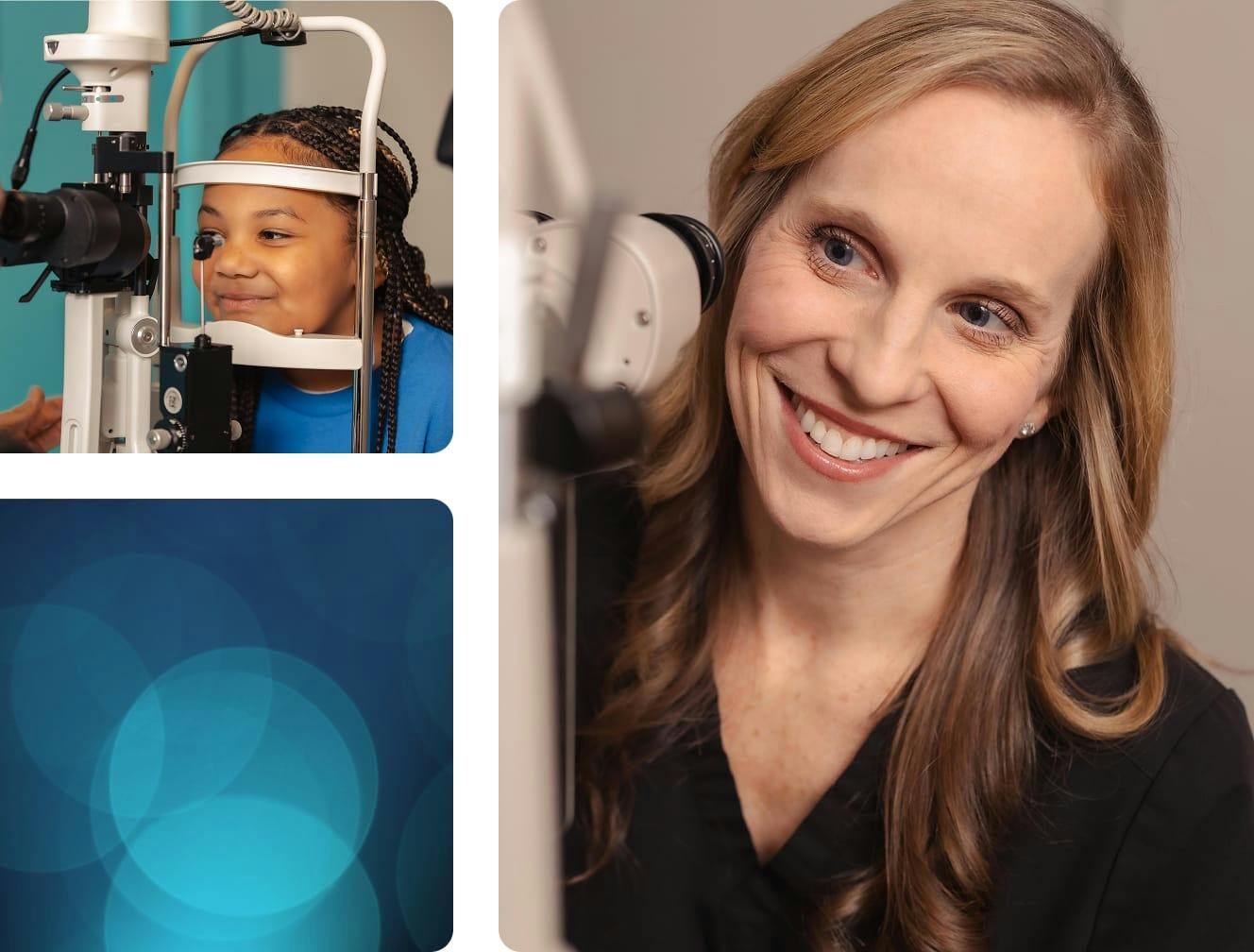
Our Targeted Dry Eye Therapies
The following therapies represent the core of our targeted dry eye treatment approach. Many guests benefit from a combination of these options, and treatment plans are adjusted over time as the ocular surface responds and heals.
Prescription Anti-Inflammatory Therapy
Inflammation is a central driver of dry eye disease for many guests, perpetuating a cycle of surface damage, gland dysfunction, and tear film instability. Prescription anti-inflammatory eye drops, including cyclosporine and lifitegrast formulations, work at the cellular level to interrupt that cycle and help restore healthier ocular surface function over time.
Unlike artificial tears, which address symptoms temporarily, prescription anti-inflammatory therapy targets the underlying disease process. Results typically build over one to three months of consistent use, and many guests experience significant improvement in both comfort and vision quality with sustained treatment.
Meibomian Gland Expression and Thermal Treatment
Meibomian gland dysfunction is the leading cause of evaporative dry eye, and restoring gland function requires more than drops can provide. In-office thermal treatments apply controlled heat to the eyelids to liquefy thickened meibomian gland secretions, followed by expression to clear blocked glands and restore the flow of the lipid layer essential to tear film stability.
These treatments can produce meaningful, lasting improvement in gland function and dry eye symptoms, with results that extend well beyond what any topical therapy alone can achieve. For guests with significant MGD, gland-directed treatment is often the single most impactful intervention in their care plan.
Intense Pulsed Light (IPL) Therapy
IPL therapy uses precisely calibrated pulses of light to target the abnormal blood vessels around the eyelid margins that contribute to meibomian gland inflammation and dysfunction. Originally developed for dermatological use, IPL has become an important tool in dry eye management for guests with evaporative dry eye, particularly those with ocular rosacea or significant lid margin disease.
IPL is performed as a series of in-office treatments and is well-tolerated by most guests. Beyond its effects on the meibomian glands, it reduces the inflammatory mediators that contribute to the broader ocular surface disease cycle, making it a valuable component of a comprehensive dry eye treatment plan for the right candidates.
Neurostimulation
For guests with aqueous-deficient dry eye, stimulating the body's natural tear production can be a highly effective approach. Neurostimulation devices work by activating the nasal-lacrimal reflex pathway, prompting the lacrimal glands to produce natural tears on demand. This approach is particularly useful for guests who haven't responded adequately to topical therapies and prefer a drug-free option for managing their condition.
Punctal Occlusion
The puncta are the small drainage openings in the inner corner of each eyelid through which tears drain away from the ocular surface. In guests with aqueous-deficient dry eye, closing one or more of these openings helps retain the tears that are being produced, keeping the ocular surface better lubricated for longer.
Punctal occlusion can be performed temporarily using dissolvable plugs to assess response before committing to a more permanent approach, or with semi-permanent silicone plugs for guests who respond well. It is a simple, well-tolerated procedure that can provide meaningful relief, particularly as part of a broader treatment plan.
Autologous Serum Eye Drops
For guests with severe dry eye that hasn't responded adequately to conventional therapies, autologous serum eye drops offer a uniquely personalized option. Prepared from the guest's own blood, these drops contain growth factors, vitamins, and proteins that closely mimic the composition of natural tears and actively support ocular surface healing.
Autologous serum drops are particularly beneficial for guests with neurotrophic dry eye, ocular surface disease associated with autoimmune conditions, or persistent epithelial defects where standard lubricants provide insufficient support. They represent one of the more advanced options in our dry eye toolkit and are reserved for cases where the clinical picture warrants them.
Scleral Lenses
For guests with moderate to severe dry eye, particularly those whose vision is also affected by surface irregularity, scleral contact lenses can be transformative. By vaulting over the entire corneal surface and creating a fluid reservoir between the lens and the eye, sclerals provide continuous hydration and optical correction throughout the day.
Scleral lenses are not a cure for dry eye, but for the right guest, they can dramatically improve both comfort and visual quality while other therapies work on the underlying disease. They are an important part of the toolkit for guests whose dry eye hasn't responded sufficiently to other interventions.
Eyelid Hygiene and Blepharitis Management
For guests with blepharitis or significant lid margin disease contributing to their dry eye, targeted eyelid hygiene treatments are a foundational part of the care plan. In-office treatments can address bacterial biofilm and Demodex infestation at the lid margins, reducing the chronic low-grade inflammation that drives meibomian gland dysfunction and tear film instability.
Paired with appropriate at-home maintenance, eyelid hygiene interventions produce a cleaner, healthier lid margin environment that supports the effectiveness of other dry eye therapies.