See Clearly Today. Stay Ahead of Cataracts Tomorrow.

For guests in their forties and beyond who are dealing with presbyopia, significant refractive error, or simply want lasting freedom from glasses and contacts, Refractive Lens Exchange offers a compelling path forward. By replacing the natural lens before cataracts have a chance to develop, RLE delivers clear vision now and removes a significant source of future vision decline at the same time.

At Boling Vision Center's Vision Correction Center, RLE is performed by experienced surgeons using advanced lens technology in our on-site Joint Commission-certified INSIGHT Surgery Center, with the individualized care and attention that a life-changing procedure deserves.

Schedule a consultation at any of our four Northern Indiana locations to find out whether RLE is the right vision correction option for you.

What Is Refractive Lens Exchange?

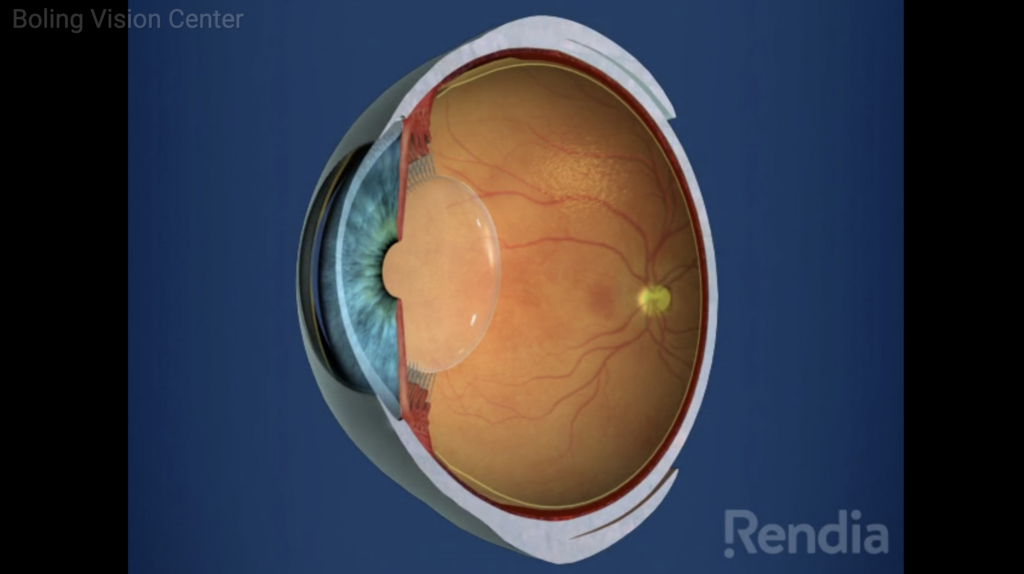
Refractive Lens Exchange, also known as Clear Lens Exchange (CLE) or Refractive Lens Replacement, is essentially the same procedure as cataract surgery, with one key distinction: the natural lens being removed is clear rather than clouded. In both procedures, the eye's natural lens is removed and replaced with a precisely selected artificial intraocular lens (IOL) that corrects the refractive error and restores clear vision.

Because the natural lens is replaced with an artificial one, cataracts can never develop in that eye. For guests who are approaching the age at which cataract development becomes increasingly common, this preventive benefit adds meaningful long-term value to an already compelling procedure. RLE is performed using the same advanced technology and techniques used in modern cataract surgery, one of the most commonly performed and most successful surgical procedures in medicine.

What RLE Corrects

RLE is one of the most versatile vision correction procedures available, addressing a broader range of prescriptions and vision needs than laser procedures like LASIK or PRK.

Presbyopia

Presbyopia, the age-related loss of near focusing ability that typically becomes noticeable in the mid-forties, is one of the primary drivers of interest in RLE. Premium multifocal and extended depth of focus IOLs can restore functional vision across multiple distances, significantly reducing or eliminating dependence on reading glasses in many guests.

Myopia (Nearsightedness)

RLE corrects myopia across a wide prescription range, including high myopia that falls outside the safe treatment range for laser vision correction.

Hyperopia (Farsightedness)

RLE is particularly well-suited for guests with significant farsightedness, which can be more challenging to address comprehensively with laser procedures.

Astigmatism

Toric IOLs correct astigmatism as part of the RLE procedure, addressing this common refractive condition without the need for separate treatment.

Background media

Lens Options for RLE

One of the most important decisions in the RLE process is selecting the intraocular lens that best suits each guest's vision goals and lifestyle. At Boling Vision Center, we offer the full range of premium IOL options and take a thoughtful, individualized approach to lens selection.

Monofocal IOLs

Monofocal lenses provide clear vision at a single focal distance, typically distance. Guests who choose a monofocal IOL typically achieve excellent distance vision and use reading glasses for near tasks. Some guests opt for monovision, with one eye set for distance and one for near, to reduce overall dependence on glasses.

Multifocal IOLs

Multifocal lenses divide light between multiple focal points, providing functional vision at distance, intermediate, and near distances simultaneously. They offer the greatest potential for glasses independence across all distances but may produce some degree of halos or glare around lights, particularly at night, during the adaptation period.

Extended Depth of Focus (EDOF) IOLs

EDOF lenses create a continuous elongated focal range rather than distinct focal points, providing clear vision across a wide range of distances with generally fewer halos and glare effects than traditional multifocal lenses. They are an excellent option for guests who want a broad visual range with a smoother adaptation experience.

Toric IOLs

Toric lenses are specifically designed to correct astigmatism in addition to the primary refractive error, and are available in monofocal, multifocal, and EDOF designs.

During your consultation, your provider will discuss the lens options most appropriate for your prescription, eye anatomy, lifestyle, and visual goals, and will give you the information you need to make a confident, well-informed decision.

Great place for you to go for your vision eye care. They do fantastic work on you. I highly recommend that you get your vision problems taken care of by them!

Barry Floyd
Quote Background

How RLE Compares to Other Vision Correction Options

Understanding where RLE fits among the available vision correction options helps guests make the most informed decision for their situation.

RLE vs. LASIK

LASIK reshapes the cornea with a laser and is best suited for younger guests with stable prescriptions and healthy corneas. RLE replaces the natural lens and is generally more appropriate for guests in the presbyopic age range, those with higher prescriptions outside the LASIK range, or those seeking to address presbyopia comprehensively. RLE also eliminates future cataract development, which LASIK does not.

RLE vs. EVO ICL

EVO ICL adds a lens in front of the natural lens and is designed for younger guests with myopia who aren't ideal LASIK candidates. RLE removes the natural lens entirely and is better suited for guests who are presbyopic or approaching the age at which cataract development becomes a meaningful consideration.

RLE vs. Waiting for Cataract Surgery

Some guests in their forties and fifties ask whether they should simply wait for cataracts to develop before having lens surgery. RLE allows those guests to enjoy the benefits of clear, corrected vision now rather than waiting years for cataracts to reach a visually significant stage, and the procedure and outcomes are essentially equivalent.

Schedule A Consultation

Contact Us
Contact us media
Woman smiling

Are You a Candidate for RLE?

RLE is generally most appropriate for guests who are:

  • Age 40 and older, though younger guests may be considered on a case-by-case basis
  • Experiencing presbyopia, significant nearsightedness, farsightedness, or astigmatism
  • Seeking to reduce or eliminate dependence on glasses or contact lenses
  • Interested in preventing future cataract development
  • Not ideal candidates for laser vision correction due to prescription range, corneal considerations, or age

A comprehensive consultation and pre-operative evaluation is the only reliable way to confirm candidacy and determine the most appropriate lens option for each guest.

Preparing for Your RLE Procedure

Getting the best possible outcome from RLE begins well before surgery day, and the steps you take in the weeks leading up to your procedure play a meaningful role in the clarity and quality of your vision afterward.

Your Consultation and Pre-Operative Evaluation

Your RLE journey begins with a complimentary consultation, followed by a comprehensive pre-operative examination to confirm candidacy, take the precise measurements needed to select and calculate your IOL, and allow you to ask every question you have about the procedure and what to expect.

Tear Film Preparation

Optimizing the tear film before surgery is an important and often underappreciated part of preparing for RLE. The tear film is responsible for a significant portion of visual clarity after the natural lens is removed, and a healthy, stable tear film supports the best possible visual outcome.

Our team will recommend specific lubricating eye drops, used four times daily, and a warming mask used once daily in the weeks leading up to surgery. The specific products best suited to your tear film will be discussed at your pre-operative evaluation. Continued use of both after surgery supports optimal visual recovery.

Background media

RLE Surgery Day

RLE at Boling Vision Center is performed at our INSIGHT Surgery Center, with one eye treated at a time. When both eyes are scheduled, both procedures may be completed on the same day, depending on individual circumstances, and your surgical coordinator will advise on the specific plan for your situation.

What to Expect

The RLE procedure follows these steps:

  • Conscious sedation is administered through an IV to keep you relaxed and comfortable throughout.
  • Anesthetic drops are applied to numb the eye, ensuring comfort during the surgery.
  • A tiny laser-created incision is made in the cornea.
  • The natural lens is carefully removed using specialized instruments.
  • The selected premium IOL is inserted through the same incision and positioned precisely within the eye.
  • The IOL is carefully aligned to deliver the intended vision correction at the targeted focal distances.
  • The incision is self-sealing and does not require stitches.

The procedure typically takes less than 15 minutes per eye, and most guests report little to no discomfort during or after surgery.

After Your Procedure

You'll need a trusted companion to drive you home after surgery. Recovery is typically quick, and many guests notice meaningful improvement in vision within the first few days, with vision continuing to refine as the eye heals over the following weeks.

Post-Operative Care

After RLE, we recommend a simplified three-in-one drop regimen that combines a steroid, an anti-inflammatory, and an antibiotic in a single convenient bottle, reducing both the complexity and the cost of the post-operative medication routine. Continued use of lubricating eye drops four times daily for the first month after surgery supports the healing process and helps optimize the visual outcome.

Follow-up appointments are scheduled at defined intervals to monitor recovery and confirm that the outcome is progressing as expected, and our team is accessible between visits for any questions or concerns.

Affording RLE

At Boling Vision Center, we believe nothing should stand between a guest and their vision goals, and we work to make RLE as financially accessible as possible.

Payment Options

We accept a wide range of payment methods, including cash, check, cashier and bank checks, and all major credit cards, including Visa, MasterCard, American Express, and Discover. RLE is also an eligible expense under most Flexible Spending Accounts and Health Savings Accounts, providing meaningful tax advantages when used to cover the procedure cost.

Financing

We offer flexible financing options with several interest-free plans as well as extended financing terms, making it possible to pursue RLE without a significant upfront payment. Our team will walk you through the available options and help identify an arrangement that works for your budget.

Cash Pay Discounts

Guests who choose to pay in full at the time of service may be eligible for cash pay discounts. Ask our team about current options when you schedule your consultation.

Long-Term Value

RLE is an investment that eliminates not only the ongoing cost of glasses and contact lenses but also the future cost of cataract surgery, which would otherwise be a near-certain expense for most guests as they age. For many guests, the long-term financial picture makes RLE a particularly sound investment alongside its vision and lifestyle benefits.

Background media

Why Choose Boling Vision Center for RLE?

RLE at Boling Vision Center means experienced surgeons, the full range of premium IOL options, and a team that takes the time to match every guest with the lens and approach that best serves their individual vision goals. From your first consultation through your final post-operative visit, you're cared for by the same practice, the same providers, and the same dedicated team, in our own Joint Commission-certified INSIGHT Surgery Center. 

With over 65 years of trusted community care and a vision correction program built around genuine individual outcomes, amazing happens here.

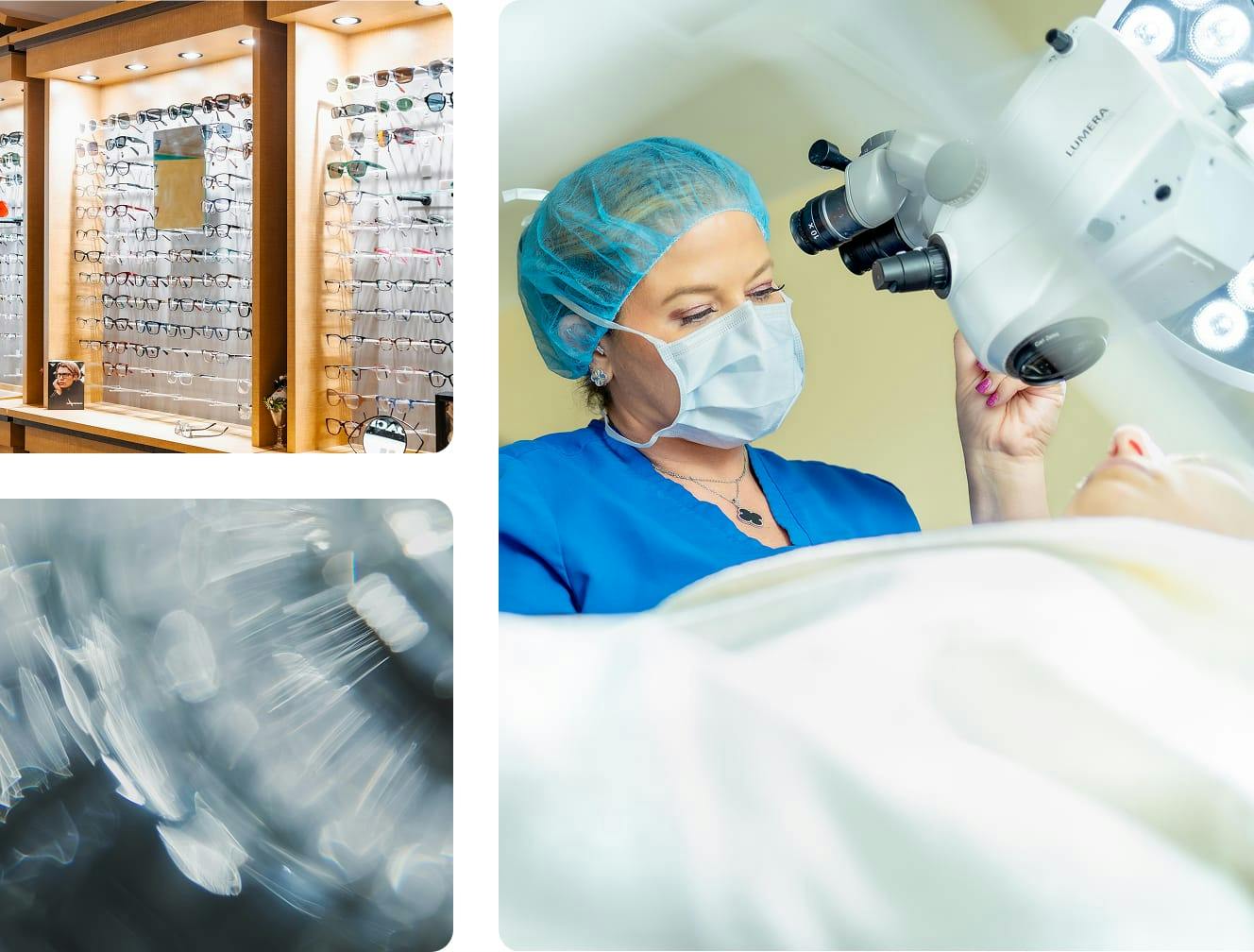
doctor treating a patient | glasses on racks | abstract art

Frequently Asked Questions Refractive Lens Exchange (RLE)

How is RLE different from cataract surgery?

RLE and cataract surgery are essentially the same procedure, technically. The key difference is that in cataract surgery, the natural lens has already become clouded and is causing vision impairment, while in RLE, the natural lens is clear but is being replaced proactively to correct refractive error and prevent future cataract development.

The surgical technique, the IOL options, and the recovery process are equivalent between the two procedures.

Will I be able to feel the new lens in my eye?

No. Once the IOL is in place, it is completely imperceptible to the wearer. You will not be aware of its presence during daily activities.

Will other people be able to see the new lens?

In most cases, no. The IOL is not visible to the naked eye in normal interaction. In certain lighting conditions, some people may notice a subtle refraction or glimmer in the pupil, but only an eye care provider examining the eye with appropriate equipment will reliably detect the lens.

How does RLE prevent cataracts?

Cataracts develop in the natural crystalline lens of the eye. Because RLE replaces the natural lens with an artificial IOL, there is no natural lens tissue remaining in which a cataract can form. Guests who undergo RLE will not develop cataracts in the treated eye.

Is RLE safe?

RLE uses the same advanced surgical techniques and IOL technology as modern cataract surgery, one of the most commonly performed and most successful surgical procedures in medicine. As with any surgical procedure, there are risks, which are discussed in detail during your consultation.

The procedure has a strong long-term safety and efficacy record, and Boling Vision Center's surgical team brings significant experience to every RLE procedure performed at INSIGHT Surgery Center.

How soon will my vision improve after RLE?

Many guests notice meaningful improvement within the first few days following RLE. Vision continues to refine as the eye heals over the following weeks, and the full outcome typically stabilizes within one to three months. The timeline varies between individuals and depends in part on the IOL selected and the individual eye's healing response.

Can RLE be performed on both eyes at the same time?

At Boling Vision Center, RLE is performed on one eye at a time. When both eyes are scheduled, both procedures may be completed on the same day, depending on individual circumstances. Your surgical coordinator will discuss the specific plan for your situation during the pre-operative process.

What if I'm younger than 40? Can I still have RLE?

RLE is most commonly performed in guests aged 40 and older, as this is the age range where presbyopia and the approach of cataract development make the procedure most compelling. Younger guests may be considered for RLE on a case-by-case basis depending on their prescription, eye anatomy, and vision goals. A consultation is the best way to determine whether RLE is appropriate for your specific situation.

Amazing Happens Here

Three generations. One unwavering standard.

Contact Us
Accessibility: If you are vision-impaired or have some other impairment covered by the Americans with Disabilities Act or a similar law, and you wish to discuss potential accommodations related to using this website, please contact our Accessibility Manager at (574) 293-3545.
Contact Us